
Leasehold Property law. Personally delivered.
Consent for alterations to a leasehold flat, for leaseholders applying and for landlords and management companies granting. We establish what your lease actually requires, what a landlord may properly ask for, and where a licence is not enough.
Acting for leaseholders and landlords · Fixed fees · Regulated by the SRA · London and nationwide
A licence to alter is a deed by which a landlord consents to alterations to a leasehold flat. It records what may be done, on what conditions, and who carries the consequences if something goes wrong later.
Almost every long lease says something about alterations. Whether you need consent, and whether your landlord can refuse it, turns on the wording of one covenant. The difference between a landlord who must act reasonably and one who may refuse for no reason at all is a word or two.
Read the covenant before anything else. It is usually in the tenant’s covenants or a schedule, and it will fall into one of three kinds.
Absolute covenant. Prohibits the work outright and makes no provision for consent. The landlord need not agree at all, may refuse for any reason or for none, and may charge for agreeing.
Qualified covenant. Prohibits the work without the landlord’s consent.
Fully qualified covenant. Says expressly that consent is not to be unreasonably withheld.
Where section 19(2) comes in. Where a lease prohibits improvements without consent, section 19(2) of the Landlord and Tenant Act 1927 deems the covenant subject to a proviso that consent may not be unreasonably withheld, notwithstanding any express provision to the contrary. A qualified covenant is therefore upgraded to a fully qualified one so far as improvements are concerned.
“Improvement” is judged from the leaseholder’s point of view: anything that increases the value or usefulness of the flat to them, even if the landlord considers it makes the building worse. That is a generous test, and most works a leaseholder actually wants to carry out will satisfy it.
But section 19(2) does not touch an absolute covenant. The statutory procedure for carrying out improvements against an absolute prohibition applies only to premises used for a trade or business, so where a flat lease prohibits works outright the prohibition is genuinely absolute. The only route is to persuade the landlord, on the landlord’s terms.
Whether a job needs consent depends on the wording of the lease rather than on how substantial the work feels. The following is the usual position in a long residential lease.
Redecoration, and replacing a kitchen or bathroom in the same position with the same services, will ordinarily fall outside the covenant. The safest test is whether the works alter the structure, the appearance, the services, or anything shared with another flat. If they do, assume consent is needed.
Everything above concerns what a leaseholder may do inside their own flat. Works that reach beyond the demised premises are a different transaction, and the statutory protections do not apply to them at all.
Section 19(2) qualifies a covenant restricting what a leaseholder does with the property let to them. It says nothing about the landlord’s own retained property. So where a leaseholder wants to take in loft or roof space, excavate a basement, build into the airspace, absorb part of a garden, fix plant to an external wall or run services through the common parts, they are not asking for permission. They are asking for something more than permission to use their own flat differently.
The landlord may simply decline, and no question of reasonableness arises. If willing, it is entitled to be paid, and the sum is a matter of valuation and negotiation rather than of what is reasonable. A premium will reflect the value of the space given up, any development value lost with it, and a share of the uplift in the value of the flat.
But it does not follow that the space must be transferred to you. A landlord can permit the works and grant rights to use the result without the space itself being demised, which is frequently how loft schemes are dealt with. Where the demise is to be enlarged instead, that takes a surrender of the existing lease and the grant of a new one: HM Land Registry will not accept a deed of variation for the purpose. A supplemental lease of the additional area is a third structure again, creating a separate demise rather than enlarging the first. Which is right affects value, saleability, your future enfranchisement position, any mortgage and the stamp duty position, so it is settled before anything is applied for. Where a licence is genuinely not enough, our deeds of variation service covers surrenders, regrants and supplemental leases.

The works would damage the structure, or the landlord has no adequate evidence that they would not.
They would compromise fire compartmentation, means of escape or the building’s safety case.
They would materially prejudice other leaseholders, noise transmission through new hard flooring being the obvious example.
They would put the landlord in breach of its own obligations to a superior landlord, an insurer or a funder.
The leaseholder has declined to provide plans, a structural engineer’s report or a method statement, or will not give an undertaking for the landlord’s reasonable costs.
A blanket refusal with no property-related reason, or silence.
Objections unconnected with the landlord’s interest in the building or with the landlord and tenant relationship.
Financial loss alone. Where the concern is a diminution in value, the answer is to require a payment as a condition of consent, not to refuse it.
Attempting to extract a collateral advantage, such as a variation of other lease terms or an increased ground rent, in exchange for consenting.
Reasonableness is tested against the reasons the landlord actually gave, and the landlord must show they were reasonable rather than that they were right.
Two points that surprise people. There is no statutory deadline: the Landlord and Tenant Act 1988, which requires a landlord to decide within a reasonable time on assignment and underletting and makes it liable in damages, does not apply to alterations. And there are no damages for an unreasonable refusal either. The remedy is a declaration from the court. Silence is not a breach of a statutory deadline, but it is evidence of unreasonableness and it achieves nothing.
What section 19(2) expressly preserves is the landlord’s right to require, as a condition of consent, a reasonable sum for any damage to or diminution in the value of the premises or neighbouring premises, together with reasonable legal and other expenses and, where the improvement does not add to letting value, an undertaking to reinstate.
A straightforward licence takes four to eight weeks from a complete application. Applications arrive incomplete far more often than not, and that is where the time goes.
We establish which covenant applies, whether the works are inside the demise and whether anything is prohibited outright. A scheme designed without reading the lease is frequently a scheme that cannot be consented to. For a landlord: identify any superior landlord, funder or insurer whose position you need before you can give yours.
Plans and elevations, a specification, a structural engineer’s report where anything structural is touched, a method statement, working hours, arrangements for protecting the common parts and removing waste, the contractor’s details and evidence of their insurance.
The landlord, usually through a surveyor, considers whether the works are acceptable and on what conditions. Questions at this stage are normal; a request for further information is not a refusal. Expect to give an undertaking for the landlord’s reasonable legal and surveying costs before work begins.
The conditions are agreed and the deed completed. Where there is a superior landlord or a mortgagee, their consents are dealt with at the same time. Only now should the works begin.
Comply with the conditions, keep the correspondence, and obtain the completion certificates the licence requires: building regulations approval, electrical and gas certificates, and any sign-off the landlord has stipulated. Send copies to the landlord and keep them with the lease.
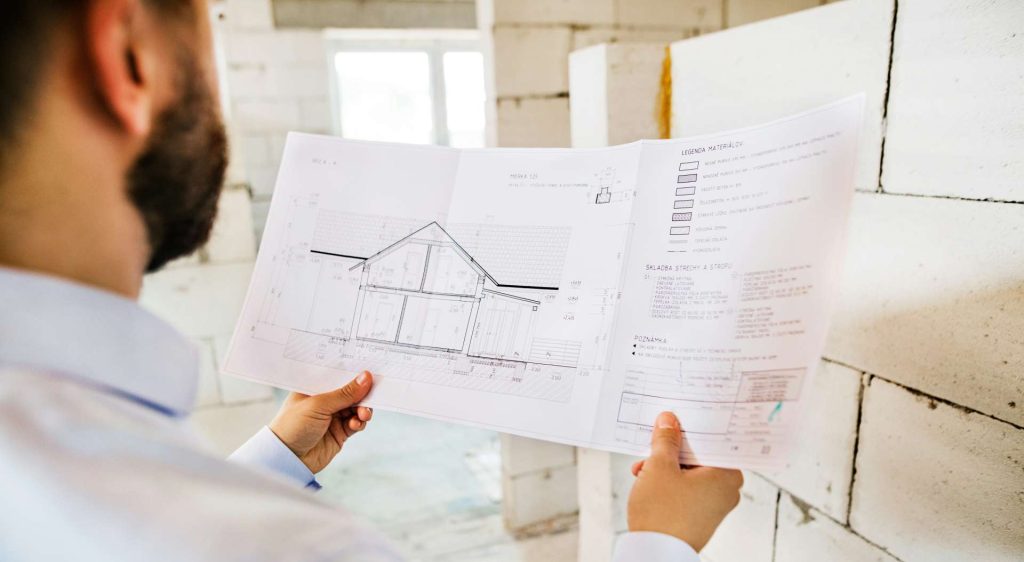
Most landlords will not consider an application without plans, elevations and a specification in the form their own surveyor expects. Producing them properly at the outset is the single biggest saving of time in this process.
A structural engineer’s report where anything structural is touched, a method statement, and an acoustic report where flooring is being changed. The last of these answers the objection landlords raise most often.
And, where the landlord instructs its own surveyor, somebody on your side to deal with them. Much of what looks like a legal disagreement about a licence turns out to be a technical disagreement between two surveyors.
Where the works reach beyond your flat, into a loft, the airspace, a basement or a garden, the question stops being whether consent is reasonable and becomes what the landlord should be paid.
That is a valuation exercise: what the space is worth, what development value the landlord is giving up, and what share of the uplift in your flat’s value is properly theirs. A landlord who has spotted the potential will price it, and an unadvised leaseholder has no way to test the figure.
We can put you in touch with RICS-qualified building surveyors for the technical work, and with specialist valuers where a premium has to be assessed. You are free to instruct anybody you wish, and we are glad to work alongside professionals you already use.
We have acted on works ranging from a single internal wall to the construction of additional floors, and can introduce you to chartered surveyors used to dealing with landlords’ advisers on both.
A licence to alter is short, and every clause in it allocates a risk. Both sides should read it as a document that will be produced in evidence one day.
Defined by reference to dated, identified plans and a specification rather than a general description. A licence for “alterations to the bathroom” protects nobody, and anything not described is not permitted.
Timescales, working hours, access, protection of the common parts, waste removal, insurance, compliance with statutory requirements, and making good any damage to the building or to other flats.
Whether the leaseholder must put the flat back at the end of the term, and on what notice.
The leaseholder indemnifies the landlord against claims arising from the works, including claims by other leaseholders. This is the clause that decides who pays when a downstairs neighbour complains about noise four years later.
An obligation to maintain and repair the altered parts and any new services, so that the question of whether new plant falls into the service charge is not left to be resolved when it fails.
Confirmation that consent is given only for the works described and does not waive any earlier breach. A leaseholder should check they are not quietly accepting responsibility for alterations somebody else carried out.
A licence to alter deals with the landlord and tenant relationship. It is not planning permission, it is not building control, and it satisfies nobody else’s requirements.
Rarely needed for internal work to a flat, frequently needed for anything external, and almost always for a loft conversion or an extension. Flats do not have the permitted development rights that houses enjoy.
Apply to structural work, new bathrooms, electrical work, insulation, replacement windows and much else. A completion certificate is what a future buyer’s solicitor will ask for.
In higher-risk buildings, building control sits with the Building Safety Regulator and works pass through statutory gateways. Anything affecting compartmentation, escape routes or the structure will be examined closely, and the landlord as accountable person has its own duties to protect. Expect a slower and more searching process.
Works to a party structure, including a wall between two flats, may require notice to the adjoining owner, separately from and additionally to the landlord’s consent.
Where the landlord holds a headlease, the superior landlord’s consent will usually be needed too. Most mortgage conditions require the lender’s consent to structural alterations, and the buildings insurer should be notified before work starts.
Separate statutory protections apply where alterations are needed in connection with a disability. The starting point is different and it should be taken as a distinct question rather than as an ordinary licence application.

This is one of the commonest reasons leaseholders come to us, and it is almost always discovered at the worst possible moment: on a sale, when the buyer’s solicitor reads the replies to enquiries.
Carrying out works in breach of the lease is a breach of covenant. The landlord may seek damages or an injunction, and in principle forfeiture, although a long residential lease cannot be forfeited for breach unless the leaseholder admits it or a court or tribunal has determined that it occurred. That is a real protection and not a reason for complacency.
The practical problem is usually commercial. Without evidence of consent a buyer’s lender may decline, the price may be reduced, or the transaction stalls while consent is obtained retrospectively from a landlord who now has every incentive to take their time.
The routes are a retrospective licence, generally obtainable but on the landlord’s terms and at the landlord’s price; a surrender and regrant where the works effectively enlarged the demise, which will involve a premium; indemnity insurance, which some buyers and lenders accept for older breaches; or occasionally reinstatement.
One warning above all. Indemnity insurance is generally unavailable once the landlord has been approached. Take advice before writing to anybody. A well-meant enquiry to the managing agent can eliminate the cheapest solution in a single email. And if you are selling, deal with it before marketing rather than during: approaching the landlord early costs the same and takes the pressure off.
We act for freeholders, resident management companies and right to manage companies granting consent as often as for leaseholders seeking it. The risks run in both directions.
Refusing badly. Where the covenant is qualified and the works are an improvement, an unreasonable refusal means the leaseholder may go to court for a declaration and then carry out the works. Silence is the weakest position of all: it is not a breach of a statutory deadline, but it is evidence of unreasonableness and achieves nothing a properly reasoned condition would not.
Consenting badly. A licence describing the works loosely, so that what was built cannot be measured against what was permitted. No indemnity, leaving the company exposed to complaints from other leaseholders about noise or water ingress. Silence on who repairs new works and services, so they drift into the service charge and are paid for by everybody.
And the constraint most landlords do not know about. Where a lease obliges the landlord to enforce the covenants in the other leases, permitting one leaseholder to do something the leases absolutely prohibit may put the landlord in breach of its obligations to everybody else in the building. That point was established in litigation that reached the Supreme Court. A consent given in good faith can generate claims from leaseholders who never objected to the works themselves. Where that applies, the answer is not simply to refuse but to consider varying the leases across the building.
We check for conflicts before we take instructions, and we will not allow one to arise. Where we already act for the other side of a matter we will say so at the outset. For more on our work on the landlord side, see landlords and resident management companies.
Licences to alter are priced case by case, because the work varies enormously with the nature of the scheme and the number of parties involved. Our minimum fee is £1,500 plus VAT, and we will give you a fixed quote once we have seen the lease and a description of the works.
Why it is quoted rather than listed. A licence for a single internal wall and a licence for an additional storey are the same document in name only. We would rather quote you a firm figure against your actual scheme than publish a range wide enough to be meaningless.
Undertakings for the landlord’s costs. A landlord’s solicitor will ordinarily require one before starting, and those costs are usually payable whether or not consent is ultimately granted. We advise capping it and making it conditional on the landlord confirming its requirements in writing first.
Administration charges. A charge made by a landlord for considering or granting a licence is an administration charge in a long residential lease, and its reasonableness can be challenged at the First-tier Tribunal. A schedule of costs is not beyond question because it was presented as a condition.
Stamp duty land tax may arise where a premium is paid for works extending the demise, and is calculated differently on a surrender and regrant. It should be checked rather than assumed.

We read the lease first. Whether the covenant is absolute, and whether the works are inside the demise, decides everything that follows. Both questions are answered before anybody spends money on drawings.
We act on both sides. For leaseholders applying and for landlords and management companies granting, which means we know what each side will properly insist on and where an argument is not worth having.
From one wall to an extra storey. We have advised on works at every scale, from a single internal opening and a bathroom moved above a neighbour to a basement excavation and the construction of additional floors on top of an existing building. The last of those is rarely a licence at all, and knowing that at the outset is what saves a scheme.
Beyond the demise is our territory. Rights of use, supplemental leases and surrenders and regrants, with proper attention to the premium, the tax and the enfranchisement consequences. This is where general conveyancers most often get it wrong.
Retrospective consent. Regularising works carried out years ago, whether during a sale or before one, including where the original leaseholder has long since moved on.
Senior oversight, proportionate cost. Every matter supervised by a senior solicitor, with routine procedural work handled by our paralegal team.
It depends on your lease. Most long leases restrict alterations, and the covenant will either prohibit the work outright, prohibit it without consent, or prohibit it without consent not to be unreasonably withheld. Read the covenant before you design anything. A scheme drawn up without reading the lease is frequently one that cannot be consented to.
Under an absolute covenant, yes: for any reason, or for none. Under a qualified or fully qualified covenant, consent to an improvement may not be unreasonably withheld, because section 19(2) of the Landlord and Tenant Act 1927 implies that proviso even where the lease says otherwise.
Where a lease prohibits improvements without consent, it deems the covenant subject to a proviso that consent may not be unreasonably withheld, notwithstanding any express provision to the contrary. It does not apply to absolute covenants, and it preserves the landlord’s right to require a reasonable sum for damage or diminution in value, its reasonable expenses, and in some cases an undertaking to reinstate.
Yours. An improvement is anything that increases the value or usefulness of the flat to the leaseholder, even if the landlord considers it makes the building worse. It is a generous test, and most works a leaseholder actually wants will satisfy it.
There is no statutory deadline. The Landlord and Tenant Act 1988, which requires a decision within a reasonable time on assignment and underletting and makes a landlord liable in damages, does not apply to alterations. Delay is evidence of unreasonableness but there is no clock.
Apply to the court for a declaration that consent has been unreasonably withheld, and then carry out the works. There are no damages for an unreasonable refusal on an alterations covenant, so the remedy is the declaration and the costs of obtaining it.
Our fee is fixed and quoted before we start. On top of it you will ordinarily be responsible for the landlord’s reasonable legal and surveying costs, usually secured by an undertaking and payable whether or not consent is granted. Where the works extend beyond your flat, a premium will also be payable.
For reasonable legal and surveying costs, yes, and section 19(2) expressly preserves the right to require a reasonable sum for damage or diminution in value. What it does not permit is a charge levied simply because consent is worth something to you. Under an absolute covenant the position is different. The landlord is under no obligation to agree and may name its price.
Almost certainly, and probably more than consent. The loft is usually outside the demised premises, so the landlord may refuse outright and, if willing, is entitled to be paid. It does not follow that the space must be transferred to you: a landlord can permit the works and grant rights of use, and where the demise is enlarged instead that takes a surrender and regrant rather than a deed of variation, which HM Land Registry will not accept. Planning permission and building regulations approval are separate again.
Section 19(2) protects you only in respect of what is let to you. Where works reach into a loft, the airspace, a basement, a garden or the common parts, the landlord may refuse for no reason and, if willing, is entitled to be paid. Whether you end up with rights of use or with the space added to your demise is a matter for negotiation. The first is quicker; the second is worth more.
Rarely for internal work to a flat, frequently for anything external, and almost always for a loft conversion or an extension. Flats do not have the permitted development rights houses enjoy. Building regulations approval, party wall notices and building safety approvals are all separate from the landlord’s consent, and a licence satisfies none of them.
The options are a retrospective licence, a surrender and regrant where the works effectively enlarged the flat, indemnity insurance, or reinstatement. Take advice before contacting the landlord: indemnity insurance is generally unavailable once the landlord has been approached, and a well-meant enquiry can eliminate the cheapest solution.
Not without more. A long residential lease cannot be forfeited for breach of covenant unless the leaseholder admits the breach or a court or tribunal has determined that it occurred. It is a real protection, though not a reason to leave a breach unresolved. The practical damage is usually done on a sale rather than in court.
Not always. Where the leases oblige you to enforce the covenants in the other leases, permitting one leaseholder to do something the leases absolutely prohibit may put you in breach to everybody else in the building. A consent given in good faith can generate claims from leaseholders who never objected to the works. It is worth checking the enforcement covenant before responding.
Yes, and a significant part of this practice is on the landlord side: freeholders, resident management companies and right to manage companies. We check for conflicts before taking instructions and will not allow one to arise.
Send us the lease and a description of what you are planning, with plans and a specification if you have them. Tell us whether anything has already been carried out, and whether you have approached the landlord. We will tell you which covenant applies, whether the works reach beyond your flat, what the landlord can properly require, and what it is likely to cost. For landlords and management companies, send us the application as it reached you. The first conversation is at no cost.