
Owning a Freehold Without Forming a Company
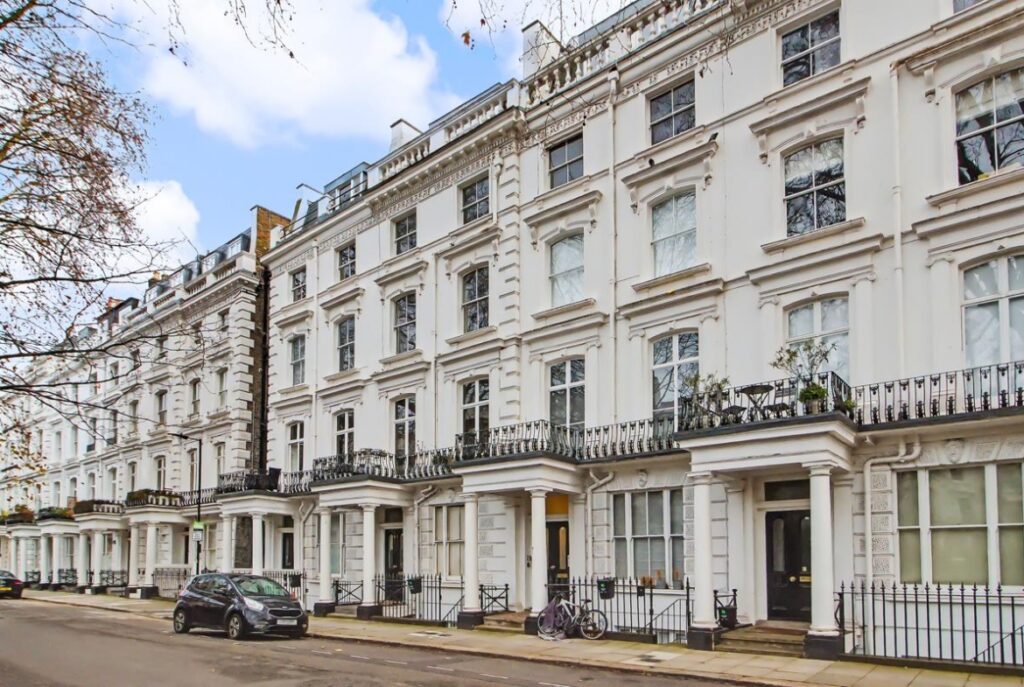
Westbourne Gardens, Bayswater W2. Three of four leaseholders bought the freehold and held it between them as joint proprietors — a genuine choice, not a shortcut.
At a glance
- Service
- Collective enfranchisement
- Location
- Westbourne Gardens, Bayswater, City of Westminster, W2
- Property
- Period stucco conversion of four flats
- Participation
- Three of the four leaseholders
- Structure
- The freehold was taken by the participants as joint proprietors rather than through a company
- Outcome
- Freehold acquired, and new 999-year leases granted to the three participating flats
Company or joint proprietors
Every group buying a freehold has to decide how to hold it. Most use a company. Where no more than four people are involved, they can instead be registered as joint proprietors of the title directly.
That is a real option rather than a corner cut, and it cuts both ways.
In its favour: nothing to incorporate, no annual filings, no directors’ duties, no company to forget about and have struck off. For three neighbours in a small building who intend to stay, it is simpler and cheaper to run.
Against it: there is no separate legal entity. The freehold is held by named individuals, so the register has to be updated whenever one of them sells, and the arrangement depends on those individuals rather than surviving them. Death, divorce or a falling-out is dealt with through trusts and the general law rather than through a constitution everybody signed up to. And the four-proprietor limit means the structure cannot grow if the non-participant later wants to buy in.
The practical point. Above four people a company is the only route. Below four it is a choice — and incorporation is still often the better answer where the participants may change, or where the building is likely to need collective decisions over many years.
The fourth flat
One leaseholder did not participate. That is unremarkable — someone is usually selling, or cannot raise their share, or simply prefers not to.
The consequences are worth stating plainly, because they are frequently glossed over when a group is trying to persuade a neighbour to join. The three who participated funded the whole purchase, including the element attributable to the fourth flat, and they took the benefit: ownership of the building and new 999-year leases. The non-participant keeps their existing lease exactly as it was, with the same unexpired term, and now has their neighbours as landlord.
The landlord will also have claimed hope value in respect of that flat — compensation for the prospect that it will one day bring its own claim. In practical terms, the participants paid something for the possibility that their neighbour extends later.
None of which is a criticism of the fourth leaseholder. It is simply the arithmetic, and it should be understood by everybody before the claim is served rather than discovered when the apportionment arrives.
Living with each other afterwards
The part of enfranchisement least often planned for is what happens the day after completion. Three neighbours now jointly own a building containing a fourth household who is their tenant.
Decisions about repairs, insurance, service charge and consents now sit with them rather than with a landlord they could complain about. Where the freehold is held by individuals rather than a company, those decisions are taken by agreement, and there is no board, no constitution and no formal mechanism for resolving a deadlock.
For three people who get on, that is a feature rather than a defect. It is worth going in with eyes open, and it is one of the reasons we take the ownership structure seriously rather than treating it as paperwork at the end of the claim.
When this applies to you
Decide how you will own it before you buy it
Company or joint proprietors. Who holds what share. What happens when somebody sells, dies, or wants out. Whether a non-participant can buy in later, and on what terms.
All of that is cheaper to settle at the outset than to unpick years later, when nobody involved at the time is still there to explain what was intended.
Common questions
Do we have to set up a company to buy our freehold?
Not where four or fewer people are involved — the participants can be registered as joint proprietors of the freehold title directly. Above four, a company is the only route, and even below it incorporation is often the better answer.
What happens to a leaseholder who does not take part?
They keep their existing lease on the same terms and unexpired term, and their neighbours become their landlord. They do not contribute to the purchase and do not share in the ownership.
Can a non-participant buy in later?
Only by agreement with the new owners, on whatever terms they set — there is no right to join afterwards. Where the freehold is held by four joint proprietors there is also no room to add a fifth.
What does it cost?
Legal fees are per participating flat: from £1,500 plus VAT per flat for up to three flats. A participation agreement is included in that rate; where a company is used, incorporation is handled by a specialist formation agent, usually from £450 plus VAT.
Client names are not used in our case studies. Properties are identified by road, block and postcode only. Every matter turns on its own facts, and outcomes described here are not a prediction of what will happen in yours.