
Acquiring an 80-Flat Estate Under the Right of First Refusal
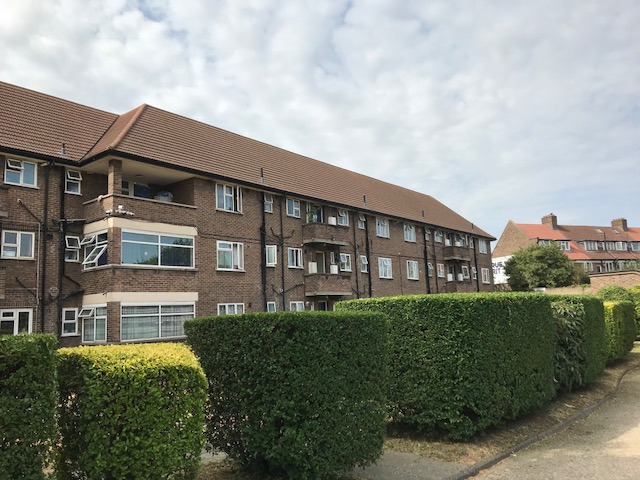
Parklands, Heston TW5. An offer notice landed on more than eighty doormats on the same morning, with two months to organise a majority. Six months later the residents owned their estate.
At a glance
- Service
- Right of first refusal — Landlord and Tenant Act 1987
- Location
- Parklands, Heston, London Borough of Hounslow, TW5
- Property
- Purpose-built estate of more than eighty flats, thirty garages and parking areas held under licence
- Landlord
- Investment company freeholder
- Acting for
- The qualifying tenants, through a nominee purchaser company
- Valuation
- Blakes Chartered Surveyors
- Outcome
- Freehold acquired in six months at 60% participation, followed by thirty-five renewals to 999-year leases at nil ground rent
The situation
When the freeholder of a large residential estate decides to sell, the leaseholders are not simply told about it afterwards. Where the building qualifies, the Landlord and Tenant Act 1987 requires the landlord to offer it to them first. That offer arrives as a formal notice, and it comes with a deadline.
At Parklands the notice landed on the doormats of more than eighty flats on the same morning. The estate was not only flats: thirty garages and parking areas held under separate licence agreements formed part of what was being offered.
The directors of the right to manage company already operating at the building came to us with three things — a statutory notice, a fixed deadline, and no obvious way of getting eighty households to agree on anything at all.
The deadline is the real problem
The right of first refusal is lost through inaction far more often than through any conscious decision. The offer notice is served under section 5A of the 1987 Act, and it must allow the qualifying tenants a period of not less than two months in which a requisite majority of them — more than half — accept it. A further period of not less than two months then runs for the accepting tenants to nominate the person who will actually take the freehold.
Neither period extends for holidays, illness, absent owners or the difficulty of reaching leaseholders who live overseas and let their flats out. If the acceptance period passes without a valid acceptance, the landlord is free to sell on the open market — in practice, usually to another investor whose commercial interests run in the opposite direction to the leaseholders’.
Our first advice to the directors was not legal advice at all. It was logistical. How to get the proposal in front of every qualifying tenant within days rather than weeks. How to explain what was on offer in terms a leaseholder with no property background could act on. How to collect and record responses so the requisite majority could be evidenced rather than assumed.
We set the timetable out in reverse from the deadline, so the directors could see precisely what had to happen in which week, and what the consequence was of any single week slipping. On a claim this size, coordination is not administration around the edges of the legal work. It is the legal work.
The practical point. Scale is an organisational problem and it is solvable. A missed deadline is neither. If a notice arrives, establish the date before you do anything else.
What were the leaseholders actually buying?
This is where a large right of first refusal case departs from an ordinary freehold purchase. The landlord had set a price for the whole estate. Before anyone could sensibly accept, the leaseholders needed to know whether that price was fair, what it was made up of, and how much of it each flat should carry.
Blakes Chartered Surveyors prepared a valuation report covering the market value of the freehold interest as offered; a separate valuation on the basis that would apply to a claim under the Leasehold Reform, Housing and Urban Development Act 1993, so participants could see the two figures side by side; the development value within the estate; and the value of the appurtenant areas — the thirty garages and the parking spaces held under licence, which generate income and carry value entirely independently of the flats.
The report then apportioned the total, flat by flat, with recommendations.
That last element mattered more than any other. Eighty households will not fund a purchase on trust. Each needs to see what they are being asked to contribute and why it differs from their neighbour’s. An apportionment that can be explained and defended is what converts a good idea into eighty individual decisions to write a cheque.
Getting to a majority, and structuring the purchase
Not everyone participates. They never do. Some leaseholders cannot raise the money, some are selling, some are abroad and unreachable, and some simply decide they would rather not.
We coordinated the claim to a 60% participation rate. The shortfall was not divided equally: participants purchased additional shares according to their own appetite for the non-participants’ element, so those who wanted more of the building — and could fund it — took more, and those who could not were not priced out of taking part at all. On a claim of this size that flexibility is what gets the total subscribed. A flat charge across every participant looks fairer on paper and routinely fails to raise the money.
A new limited company was incorporated to act as nominee purchaser and to hold the freehold on completion, separate from the right to manage company already operating at the building. The two do different jobs. An RTM company’s statutory function is management; ownership of the freehold sits outside it, and keeping them in separate vehicles avoids folding two different sets of duties into one entity.
Setting the vehicle up properly at the outset — its constitution, who holds shares, what happens when a participant sells their flat — avoids a set of problems that are tedious and expensive to unpick years later, when nobody involved at the time is still there to explain what was intended.
After completion
Acquiring the freehold does not lengthen anybody’s lease. It is a point that surprises a great many leaseholders, and it is the reason the job was not finished at completion.
We applied to expedite registration of the freehold transfer at HM Land Registry, so that the new leases could be granted and registered without waiting out the standard queue. Thirty-five participants then took new 999-year leases at nil ground rent, granted informally by the company they now owned to themselves as its members.
The result is an estate where the residents control the freehold, the ground rents have gone, and the leases are long enough that no one presently living there will need to think about extending again.
When this applies to you
If a notice arrives from your landlord
The single most important thing to understand is that it has a deadline, and the deadline is short. Before anything else, find out how long you have.
Scale is not the obstacle it appears to be. Eighty flats is harder than eight, but it is harder in ways that are organisational rather than legal, and those are solvable with a timetable and someone to run it. What is not solvable is a missed deadline.
Common questions
What happens if we miss the deadline on a right of first refusal notice?
The right falls away and the landlord may sell to whoever they choose. There is no general power to extend the period because leaseholders were slow to organise. This is why the first step on receiving a notice is to establish the deadline and work backwards from it.
Do all the leaseholders have to take part?
No. A requisite majority of qualifying tenants must accept, but participation beyond that is voluntary. At Parklands 60% participated, and those participants covered the shares of those who did not, taking the benefit of ownership in return.
Can we extend our leases once we own the freehold?
Yes, and you should. Buying the freehold does not change the length of any existing lease. Once the freehold is registered in the company’s name, the company can grant new long leases to its members — at Parklands, 999 years at nil ground rent.
How is a price apportioned across eighty flats and thirty garages?
By valuation. The garages and parking carry value independently of the flats, and the total has to be divided on a basis each participant can see and check. Without that, a claim of this size does not get funded.
Speak to us
Has your landlord offered you the building?
Send us the notice. The first thing we will tell you is your deadline, and the second is what has to happen before it.
Client names are not used in our case studies. Properties are identified by road, block and postcode only. Every matter turns on its own facts, and outcomes described here are not a prediction of what will happen in yours.