
Flats Above Shops, and the Quarter That Decides Everything
New Kings Road, Parsons Green SW6. Leaseholders in mixed-use buildings routinely assume they cannot buy their freehold. The test is floor area, and here it fell the right side of the line.
At a glance
- Service
- Collective enfranchisement
- Location
- New Kings Road, Parsons Green, London Borough of Hammersmith and Fulham, SW6
- Property
- Mixed-use building — four flats above commercial premises
- Qualification
- Non-residential floor area fell below the 25% threshold, so the building qualified. Leases were already in place on the commercial parts, so no leasebacks had to be granted
- Outcome
- Freehold acquired by the four leaseholders, concluded nine months from instruction
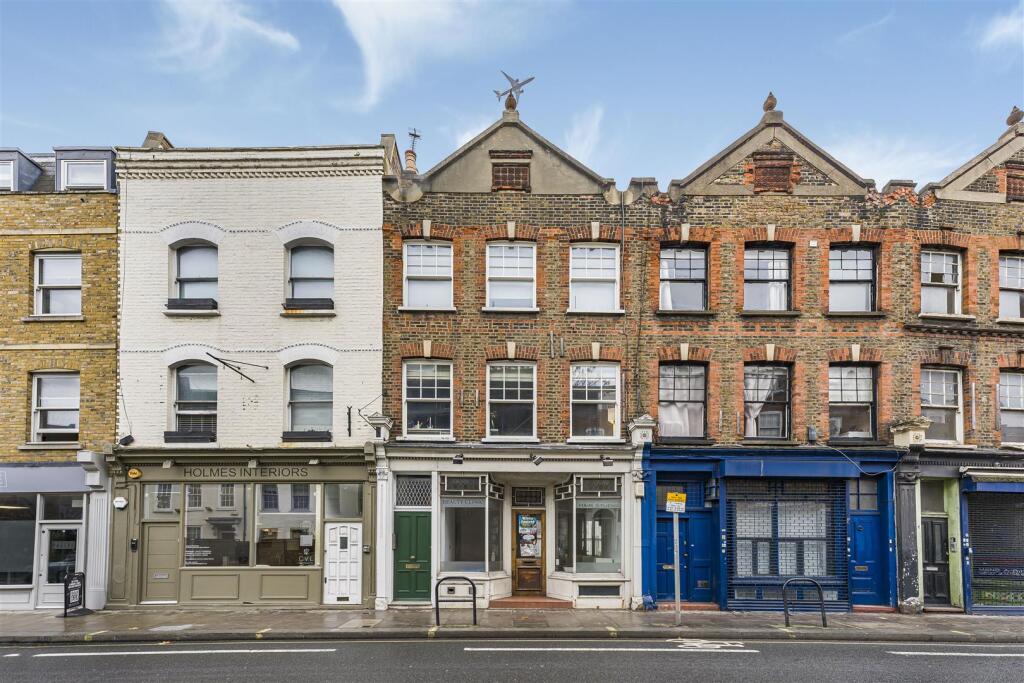
The 25% test, and why it is measured rather than judged
Buildings with shops, offices or a restaurant at street level are the ones leaseholders most often write off. The assumption is that a commercial element rules the building out. It does not, unless it is large enough.
The right to collective enfranchisement is lost where more than a quarter of the building’s internal floor area is in non-residential use. That is an arithmetical test, not an impression. It does not matter how prominent the shopfront is, how many customers come and go, or how the building reads from the pavement. It matters how the floor areas compare.
Common parts used in connection with the flats are generally left out of the calculation, which frequently helps. So a building that looks marginal from outside can qualify comfortably once measured, and occasionally the reverse.
At New Kings Road the commercial element fell below the threshold and the four leaseholders qualified.
The practical point. If your building has commercial space, have the floor areas measured before you write off the idea. A shop underneath does not necessarily stop you buying your freehold.
Why the existing commercial leases mattered
A landlord losing the freehold of a mixed-use building can in some circumstances require a leaseback of the non-residential parts — a lease granted back to them on completion, so they retain the commercial element while the leaseholders take the freehold.
That changes the transaction in two ways. It reduces the premium, because the participants are acquiring less. And it leaves the new freehold company with the former landlord as its tenant, which is a relationship the directors have to manage for as long as the lease runs.
Here the commercial units were already let on existing leases, so no leasebacks arose. The company took the freehold subject to those leases and became the landlord of the commercial tenants directly.
That is a materially better position, and it is worth establishing early because it affects both the price and what the residents are signing up to run.
Becoming a commercial landlord by accident
Residents who buy a mixed-use freehold acquire something rather different from residents who buy a purely residential one. They now hold the reversion on commercial leases, with rent to collect, repair obligations to enforce, and eventually renewals to negotiate.
None of it is unmanageable, and the commercial rent is an asset rather than a burden. But it should be a decision rather than a discovery, and the participants should understand before completion what the commercial leases say, when they end and what happens then.
Advising on that is part of the job rather than an extra. The claim concluded nine months from instruction.
When this applies to you
If there is a shop underneath
Three questions, in order. What proportion of the internal floor area is non-residential? Are the commercial parts already let, or would the landlord be entitled to a leaseback? And are the participants content to become the landlord of a commercial tenant?
Answer those before serving anything. A claim that fails on qualification has cost everybody a great deal for nothing, and where a building sits close to the line the measurement is worth doing properly rather than estimating.
Common questions
Can we buy the freehold if there are shops in the building?
Usually, yes. The right is lost only where more than a quarter of the building’s internal floor area is in non-residential use. Where a building sits near that line the measurement should be done carefully before a notice is served.
What is a leaseback?
A lease granted back to the former landlord on completion, allowing them to retain part of the building — commonly the commercial units. It reduces the premium but leaves the outgoing landlord as a tenant of the new freehold company. Here the commercial parts were already let, so none arose.
Do the commercial tenants have to agree?
No. They hold their leases and those continue; the freehold company simply becomes their landlord. What matters is that the participants understand the terms of those leases before completion.
What does a claim like this cost in legal fees?
Collective enfranchisement fees are charged per participating flat: from £1,500 plus VAT per flat for up to three flats, and from £1,250 plus VAT per flat for four to eight. Mixed-use qualification work may add to that where measurement is contested.
Client names are not used in our case studies. Properties are identified by road, block and postcode only. Every matter turns on its own facts, and outcomes described here are not a prediction of what will happen in yours.