
A Lease Extension Claim Handled From the Landlord’s Side
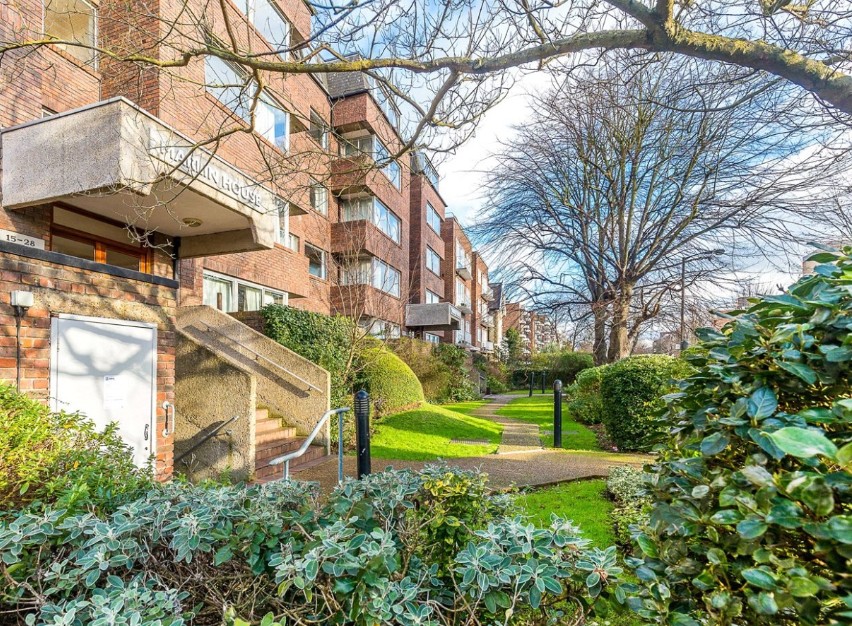
Marlin House, Putney SW15. A resident freehold company, run by people who live in the building, served with a statutory claim by one of its own neighbours.
At a glance
- Service
- Statutory lease extension claim, defended from the landlord’s side, alongside the block’s transactional work
- Location
- Marlin House, Putney, London Borough of Wandsworth, SW15
- Client
- The resident freehold company. Two leaseholders remain outside it
- Instructed by
- The block management company
- Valuation
- Blakes Chartered Surveyors, for the freehold company
- Outcome
- Settled by negotiation. The leaseholder met our client’s legal and valuation costs; the costs of negotiating the premium fell on the company. We also handle the block’s deeds of covenant and licences to assign
The situation
Almost everything written about lease extensions is addressed to the leaseholder making the claim. Rather less is written for the people on the other end of it — and at a great many buildings, those people are now the residents themselves.
Marlin House is owned by a resident freehold company. Its directors are people who live in the block and who took it on because somebody had to. Two leaseholders are not members, having chosen not to participate when the freehold was bought.
One of them served a statutory notice claiming a new lease. We were instructed through the block management company to act for the freehold company as landlord.
What a freehold company actually has to do
A statutory claim is not a negotiation that can be conducted at whatever pace suits. It is a process with deadlines, and the deadlines bind the landlord as much as the leaseholder.
The landlord must respond by counter-notice within the period specified, either admitting the claim and setting out the terms it proposes, or disputing it on stated grounds. If no counter-notice is served in time, the leaseholder can apply to the court for an order granting the new lease on the terms set out in their own notice. Not the terms the landlord would have proposed — the terms the leaseholder proposed, unanswered.
A freehold company that misses the date does not simply arrive late at a negotiation. It forfeits the negotiation altogether.
For a board of resident directors, that is the uncomfortable part. The obligation lands on volunteers, it arrives without warning, and the first few weeks matter more than the rest of the claim put together.
The practical point. When a notice arrives, establish the response date before anything else and diarise it. Everything else can be worked out afterwards. That date cannot.
Valuing from the other side
Blakes Chartered Surveyors valued for the freehold company.
A landlord’s valuation is not simply the leaseholder’s valuation with the answer moved. The landlord is being deprived of an interest and is entitled to be compensated for what is actually being taken — the loss of the reversion, the loss of the ground rent, and, where the lease is short enough, the share of marriage value the legislation allocates. Each element is evidenced separately, and the difference between a properly supported valuation and an approximate one falls directly on the members of the company.
It is worth being plain about why the company needs its own valuer rather than relying on the leaseholder’s figure. The two are not adversaries in any dramatic sense. They are neighbours. But they are on opposite sides of a price, and only one of them has instructed somebody to work out what it should be.
The claim settled by negotiation.
The part that makes it awkward
The leaseholder claiming a new lease lives in the building. The directors deciding how to respond live in the building. They see each other on the stairs.
This is where a resident freehold company most often goes wrong, and it is rarely through bad faith. A company acting as landlord owes duties as landlord. It must respond properly, on time, on grounds the legislation recognises, and it cannot decline a valid claim because the directors would rather not deal with it, or because the claimant declined to chip in when the freehold was bought. Those feelings are understandable and they are not a legal position.
Part of what a solicitor provides here is distance. The response comes from the company’s advisers rather than from a neighbour, the grounds are the ones the Act permits, and the relationships in the building survive the process.
The rest of the year
The claim was one item in a continuing instruction. Flats change hands, and each sale brings a deed of covenant binding the incoming leaseholder, a licence to assign, and the notices the lease requires. That work sits on the critical path of somebody’s sale, and the block management company needs it turned round quickly rather than perfectly on the thirtieth day.
When this applies to you
If your freehold company receives a notice
Establish the date by which you have to respond. Then get your own valuation — the leaseholder has one, and it was not prepared with your members’ interests in mind.
The leaseholder meets your reasonable legal and valuation costs of the claim, within limits. Not everything is recoverable, and the boundary matters: here the costs of negotiating the premium fell on the company itself. Worth knowing before the negotiation starts rather than when the bill arrives.
Common questions
We own our freehold — can a leaseholder still force us to grant an extension?
Yes. A qualifying leaseholder has a statutory right to a new lease and it is exercisable against whoever owns the freehold, including a company owned by the other residents. Owning the freehold collectively does not exempt the company from the legislation.
What happens if we miss the deadline to respond?
The leaseholder can ask the court to grant the new lease on the terms they themselves proposed, unanswered by you. It is the single most consequential date in the process.
Do we have to pay our own legal and valuation costs?
The leaseholder meets the landlord’s reasonable legal and valuation costs of the claim. Not everything is recoverable — at Marlin House the costs of negotiating the premium fell on the freehold company.
Does our managing agent handle this?
Agents run a building day to day; they do not give legal advice and their professional indemnity cover does not extend to it. In practice the agent instructs the solicitor, as happened here, and the two work alongside each other.
Client names are not used in our case studies. Properties are identified by road, block and postcode only. Every matter turns on its own facts, and outcomes described here are not a prediction of what will happen in yours.