
Adding a Communal Staircase to a Flat, by Surrender and Regrant
Holland Road, W14. A landlord asked to hand a redundant staircase to one leaseholder — and two steps stood between the agreement and the register.
At a glance
- Service
- Adding to a demise — surrender and regrant
- Location
- Holland Road, Royal Borough of Kensington and Chelsea, W14
- Property
- Period conversion
- Acting for
- The freeholder
- Request
- A leaseholder asked for a redundant communal staircase to be brought into their flat
- Outcome
- Staircase transferred into the flat’s demise by surrender and regrant, on terms identical to the old lease save for the extent, after a section 5A offer notice to the qualifying tenants expired without acceptance. A modest premium was agreed and the leaseholder covered our client’s costs
The situation
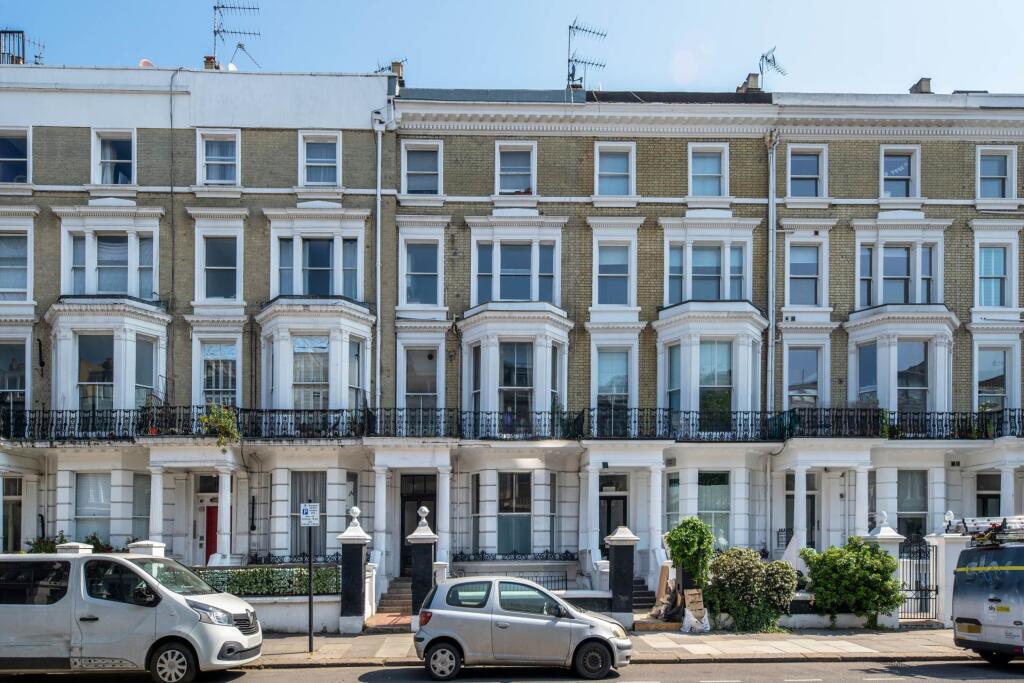
Our client, the freeholder of a period conversion on Holland Road, was approached by one of the leaseholders. A staircase within the building had become redundant as a means of access to the common parts, and the leaseholder wanted it brought inside their flat.
The freeholder was willing in principle. The question was how to do it, and what to charge.
Why a deed of variation will not work
The obvious instinct is to vary the lease. The demise is defined in the lease, so amend the definition and add the staircase to it. A great deal of what is written about this online suggests exactly that.
It does not work. HM Land Registry will not accept a deed of variation that adds land to a demise. A variation can change many things about a lease, but it cannot enlarge the property let by it. Attempting it produces a document that the parties believe has worked and that the register does not reflect — a problem that typically surfaces years later, on a sale, when the buyer’s solicitor asks why the title plan does not match the flat.
The correct mechanism is a surrender and regrant: the existing lease is surrendered and a new lease granted over the enlarged demise. Here the new lease was identical to the old one in every respect other than the extent of the property demised. That is the objective — the leaseholder ends up with the flat they had plus the staircase, and nothing else about their position altered by the mechanism used to achieve it.
The practical point. A deed of variation feels lighter and cheaper, and it will not register. The cost of getting it wrong is not the difference in fees; it is a defective title that emerges at the worst possible moment.
What we checked before advising
Three questions determine whether a grant of this kind is straightforward or impossible.
First, does anybody else have rights over the space? A staircase that other leaseholders are entitled to use cannot simply be given away, whatever the landlord and the applicant agree between them. Here it could not be: no other leaseholder held rights of access over it, which removed the principal obstacle at the outset.
Second, is the landlord’s title charged? A lender with a charge over the freehold has an interest in what is granted out of it and its consent will be required. Here the freehold was unencumbered.
Third, is the existing lease mortgaged? On a surrender and regrant the leaseholder’s lender has to be brought in, because the charge attaches to the lease being surrendered — and if that lease disappears without the lender’s involvement, so does its security. There was no lender on either side here, which is unusual and made the transaction considerably simpler than these usually are.
The step most landlords do not know about
There is one further question, and it is the one most often overlooked. Granting a new lease of common parts is a disposal by the landlord. Where a building has qualifying tenants, a disposal of that kind engages the right of first refusal under the Landlord and Tenant Act 1987.
That means a landlord cannot simply agree terms with the leaseholder who asked. The other qualifying tenants have to be offered the opportunity first, by formal notice, and the period allowed for them to respond has to expire before the landlord is free to proceed.
The notice served here was a section 5A offer notice allowing two months. It had in fact been discussed with the other leaseholders in advance, so nobody expected an acceptance and none came. That is worth saying rather than glossing over: knowing the answer does not remove the need to ask the question properly. An informal understanding between neighbours is not a substitute for the notice, and a landlord who relies on one has still made a disposal in breach of the Act — with consequences that attach to the property and can be raised years afterwards by a leaseholder who was never asked.
The premium
A modest premium was agreed with the leaseholder, who also covered our client’s legal costs — the ordinary position where a leaseholder asks a landlord to do something for their benefit.
The right figure for space of this kind is not what it would be worth as a room on the open market; it reflects what the landlord is giving up, which in the case of a redundant staircase is very little, set against what the leaseholder gains, which may be a good deal more. Getting that balance right is what keeps a negotiation between a landlord and a resident from becoming an argument.
When this applies to you
If a leaseholder asks you for part of the building
Landlords are asked for this more often than might be expected — a redundant staircase, a corridor that serves nothing, a cupboard on a landing, a section of roof space. The request is usually reasonable and the answer is frequently yes.
What matters is doing it by the right mechanism, and checking before terms are agreed with anybody whether the right of first refusal has to be dealt with first. That is the step landlords are least likely to know about, and the one that cannot be corrected afterwards.
Common questions
Can a deed of variation add land to my flat’s demise?
No. HM Land Registry will not register a variation that enlarges the demised property. Adding to a demise requires a surrender of the existing lease and the grant of a new one over the larger extent.
Does the freeholder have to get the other leaseholders’ agreement?
There are two separate questions. First, do they hold rights over the space? If they are entitled to use it, those rights have to be dealt with before anything can be granted. Second, and independently, granting a lease of common parts is a disposal that engages the right of first refusal — so the other qualifying tenants must be formally offered it first, whether or not they hold rights over it.
How much should a freeholder charge for common parts?
There is no formula. The premium reflects what the landlord gives up and what the leaseholder gains, and for genuinely redundant space it is usually modest. A valuation is worth taking where the space has real development potential.
What happens if a landlord grants without serving notice?
The disposal is made in breach of the Act. The consequences attach to the property and can be pursued afterwards by qualifying tenants who were never given the opportunity, so it is not something that resolves itself with time.
Client names are not used in our case studies. Properties are identified by road, block and postcode only. Every matter turns on its own facts, and outcomes described here are not a prediction of what will happen in yours.