
Buying the Freehold From a Landlord Who Could Not Be Found
Hatherley Road, Walthamstow E17. Two leaseholders, an untraceable freeholder, and a Tribunal that accepted our valuer’s figure as it stood.
At a glance
- Service
- Freehold acquisition where the landlord cannot be traced
- Location
- Hatherley Road, Walthamstow, London Borough of Waltham Forest, E17
- Property
- Two-flat period conversion
- Tracing
- In-house searches, a professional tracing agent, and an advertisement in the London Gazette
- Valuation
- A CPR-compliant expert report by Blakes Chartered Surveyors
- Outcome
- Freehold acquired by county court order in around twelve months. The Tribunal agreed with our valuer’s figure. Costs attributable to the missing landlord element came to about £5,000 and were deducted from the premium
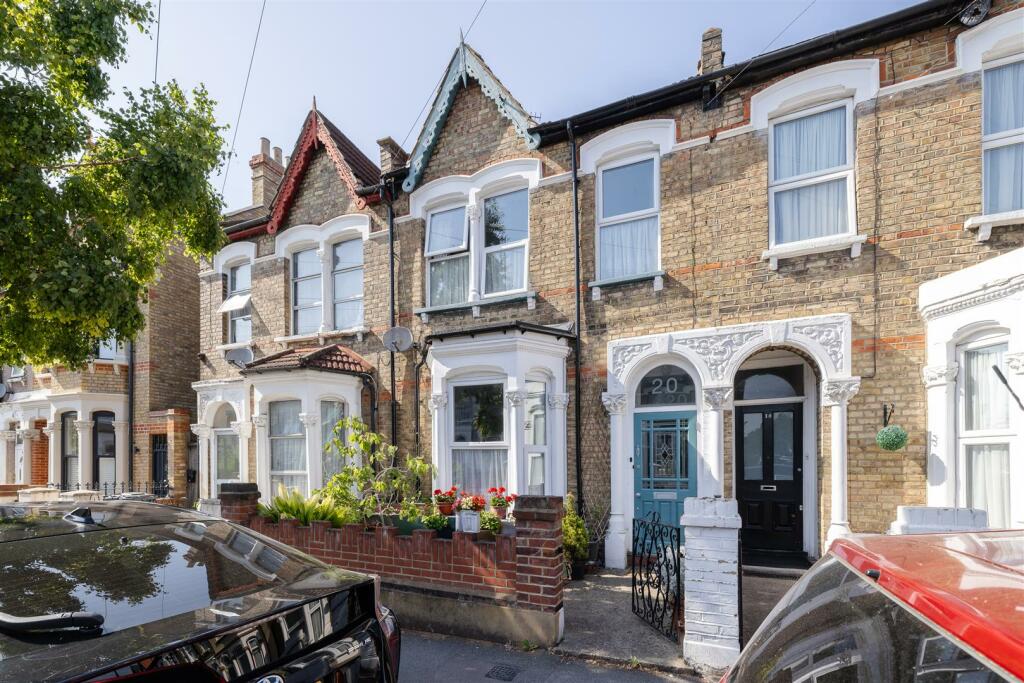
The situation
Two leaseholders in a converted house on Hatherley Road wanted to buy their freehold. Nobody knew where the freeholder was.
It is a familiar London story. A freehold in a small conversion changes hands for very little, is bought by someone who takes no interest in it, and after a death, a company dissolution or an emigration there is nobody at the address on the register. The ground rent demands stop arriving. Nobody minds until somebody wants to sell.
Proving the landlord cannot be found
The court has to be satisfied that reasonable efforts were made, which means evidence of what was actually done.
We carried out searches in-house against the register, the register of companies and the other public sources that establish who the landlord is and where they were last known. We instructed a professional tracing agent, because a court is entitled to expect more than a few searches from the solicitors’ own desk. And we placed an advertisement in the London Gazette, the recognised means of giving public notice to someone who cannot be reached directly.
Each step was recorded as it happened. That record is not administration around the edges of the claim — it is what the application rests on. A thin account of the search invites the court to ask whether the landlord is genuinely untraceable or merely inconvenient to find.
The application was made to the county court.
Fixing the price with nobody on the other side
In an ordinary purchase two valuers exchange figures, argue, and settle somewhere between them. Here there is no landlord, no opposing valuer and no negotiation. The Tribunal determines the price on the evidence before it, and the only evidence is the leaseholders’ own.
That places an unusual responsibility on the valuation. It is not an opening position with room to concede; it is expert evidence, and an expert’s duty runs to the Tribunal rather than to the client paying for it. A report that reads as advocacy for a low figure invites scepticism, and scepticism in these circumstances means delay.
Blakes Chartered Surveyors were instructed at the point of application and prepared a CPR-compliant freehold valuation report. The Tribunal agreed with the valuation.
That last sentence carries more weight than it appears to. The figure was accepted as it stood, which meant no further hearing, no revised evidence, and no additional cost to two leaseholders who had already been through a long process to get there.
The practical point. With no landlord to negotiate against, the valuation is not a bargaining position. It is evidence, and it has to be prepared to the standard a court expects.
What the missing landlord element cost
The additional costs attributable to the landlord being missing — tracing, the advertisement, the court application and the associated work — came to around £5,000 in total, and were deducted from the premium rather than paid on top of it.
That changes the arithmetic considerably. The premium is paid into court for a landlord who may never appear to claim it. Costs coming out of that sum rather than out of the leaseholders’ pockets is a materially different proposition from the same figure charged separately.
A court will allow only what is reasonable, proportionate and properly justified, so the way the work is done and recorded has a direct bearing on what is ultimately allowed.
The whole matter took approximately twelve months from instruction to completion.
When this applies to you
If your ground rent demands stopped arriving
If nobody answers at the address on your lease, you are not stuck. The route exists precisely for this and it is used regularly.
It takes longer than an ordinary claim and it costs more, because tracing, advertisement, an expert report and a court application all have to be paid for. What it produces at the end is a clean freehold title and a building that can be sold, mortgaged and managed without a phantom landlord in the background.
Common questions
What can we do if we cannot find our freeholder?
Apply to the county court for an order allowing you to acquire the freehold without the landlord. You will have to show reasonable efforts to trace them — typically searches, a professional tracing agent and an advertisement in the London Gazette.
How is the price decided if there is no landlord to negotiate with?
The Tribunal determines it on the evidence before it, which is your valuation report. It has to meet the standards required of expert evidence rather than read as a negotiating position, because nothing is going to be negotiated.
How long does it take and what does it add to the cost?
This claim took approximately twelve months, with around £5,000 attributable to the missing landlord element — deducted from the premium rather than charged on top. Tracing has to be completed before anything else can begin, which is where most of the extra time goes.
Can we do this for a lease extension as well as a freehold purchase?
Yes. The same difficulty arises where a leaseholder wants a new lease and the landlord cannot be found, and there is a route for it. Which application is right depends on what you are trying to achieve and how many flats are involved.
Client names are not used in our case studies. Properties are identified by road, block and postcode only. Every matter turns on its own facts, and outcomes described here are not a prediction of what will happen in yours.