
A Vesting Order After the Freeholder Refused to Complete
Arran Road, Catford SE6. Three leaseholders had settled the terms, agreed the price and were ready to complete. Then the landlord simply did not sign.
At a glance
- Service
- Vesting order where a landlord will not complete
- Location
- Arran Road, Catford, London Borough of Lewisham, SE6
- Property
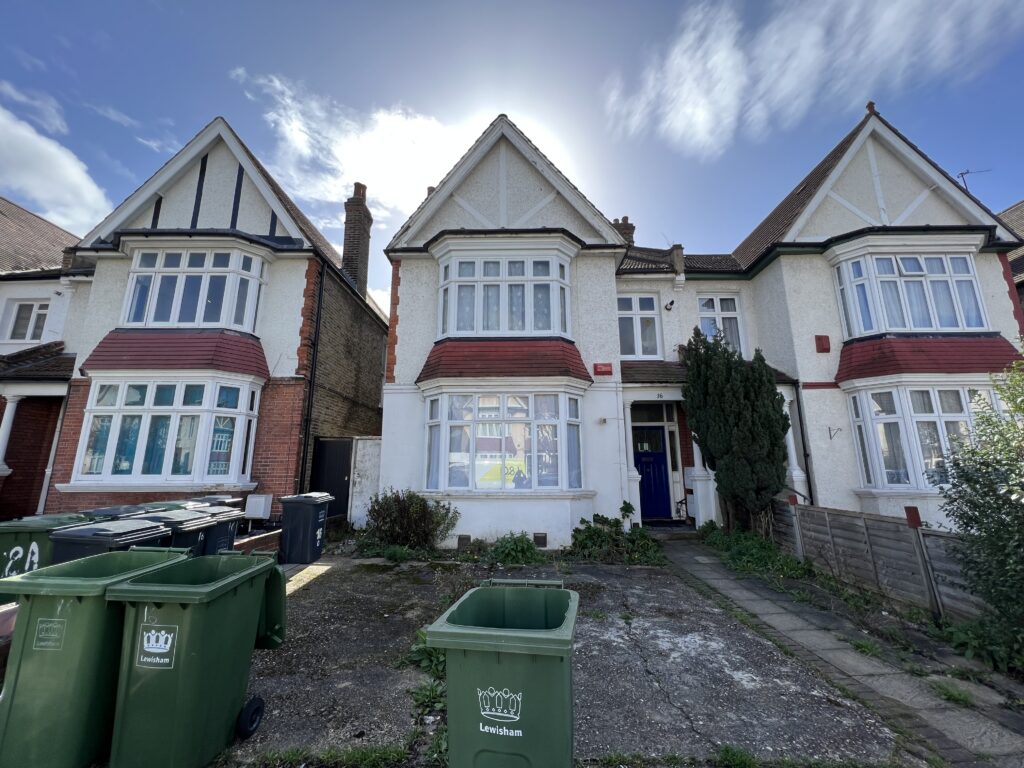
- Three-flat period conversion
- Acting for
- The three leaseholders
- Problem
- The claim reached its final stage with terms and price settled, and the landlord did not execute the transfer
- Outcome
- The freehold was vested in our clients by order of the county court, and costs were recovered
The situation
Three leaseholders in a converted house in Catford set out to buy their freehold. The claim ran its course. The terms were settled, the price was agreed, and everything was in place for completion.
Then the landlord did not sign.
Not missing — unwilling
This is a different problem from an absent landlord, and it is worth being precise about the difference, because the two are often confused and the remedies are not identical.
A missing landlord cannot be found. The leaseholders make reasonable efforts to trace them, fail, and apply to the court on that basis. An unwilling landlord is perfectly findable. They receive the correspondence. They simply decline to do the last thing required of them.
From the leaseholders’ point of view the effect is identical — no signature, no transfer, no freehold — but the answer the law gives is not the same, and neither is the evidence the court needs to see.
The application
Where a landlord fails to complete, the county court can make an order vesting the freehold in the nominee purchaser without the landlord’s signature. The order does what the transfer would have done.
What the court needs is a clear record: that the claim was validly made, that the terms and the price were properly settled, that the landlord was given the opportunity to complete, and that they did not. Nearly all of that is built during the claim itself, months before anyone anticipates needing it. Correspondence kept in order, deadlines documented, every step properly recorded — this is why claims are run that way even when the landlord is being entirely cooperative, because you rarely know in advance which ones will end here.
The freehold was vested in our clients by order of the court.
Costs
Costs were recovered.
That matters more than it may appear. The obstacle to enforcing a right is usually not the law but the cost of insisting on it, and leaseholders who have already paid a premium and their own fees are understandably reluctant to spend more. A landlord who declines to complete at the final stage is gambling that the leaseholders will not follow through. Recovering the costs of the application removes a good deal of the leverage in that position.
A court will allow what is reasonable, proportionate and properly justified, so the way a claim is run and recorded has a direct bearing on what can be recovered at the end of it. Another reason to keep the file in order from the first letter.
The practical point. A landlord who stops engaging at the final stage is betting you will not follow through. Recovering costs is what makes following through worthwhile.
When this applies to you
If your freeholder has gone quiet
If your freeholder has stopped responding, or has responded and then refused to complete, the claim is not lost. It is delayed and it becomes more expensive, but the statutory right does not evaporate because the landlord finds it inconvenient.
The practical point is to keep the record straight from the beginning. A claim that has been properly documented converts into a court application without difficulty. A claim conducted loosely, by agreement and over the phone, has to be reconstructed before it can be presented — and by then the landlord is not answering.
Common questions
What happens if the freeholder refuses to sign the transfer?
The county court can vest the freehold in the nominee purchaser by order, without the landlord’s signature. The claim does not fail because the landlord declines to cooperate at the final stage.
Is this the same as a missing landlord application?
No. A missing landlord application deals with a freeholder who cannot be traced despite reasonable efforts. This is a landlord who can be found but will not complete. The remedy is similar in effect but the evidence required is different.
Who pays the cost of going to court?
It depends on the circumstances and the order made. A court will allow what is reasonable, proportionate and properly justified. In this case costs were recovered from the landlord.
Speak to us
Has your freeholder stopped responding?
Tell us how far the claim got and what has happened since. The route through is usually clearer than it looks from the inside.
Client names are not used in our case studies. Properties are identified by road, block and postcode only. Every matter turns on its own facts, and outcomes described here are not a prediction of what will happen in yours.