
The Sale of a Heavily Refurbished Freehold House
Andalus Road, Stockwell SW9. A returning client, no onward chain, one link below, and a house that had been substantially altered before it came to market.
At a glance
- Service
- Residential conveyancing — sale of a freehold house
- Location
- Andalus Road, Stockwell, London Borough of Lambeth, SW9
- Client
- A returning client
- Chain
- No onward purchase, with one link below
- Complication
- The property had been heavily modified and refurbished before the sale, which is where the enquiries concentrate
- Outcome
- Completed five months from instruction
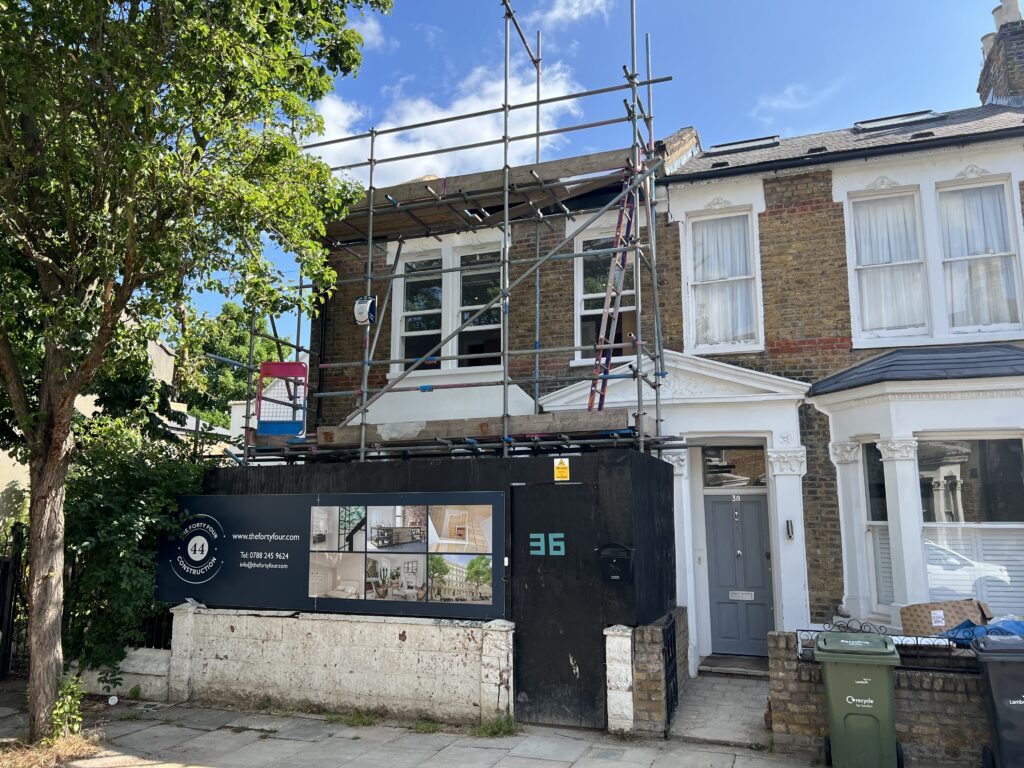
Where a refurbished house actually gets held up
A freehold house with no leasehold complications and no onward purchase looks like the simplest transaction on this site. On paper it is. What decided the pace here was the work that had been done to the building.
Substantial alterations generate a specific and predictable set of enquiries. Was planning permission required, and if so was it obtained? Were building regulations approvals issued, and are the completion certificates available? Was a party wall award needed for anything affecting a shared wall, and did the neighbours sign? Were the electrics and any gas work certified by someone competent? Is there a structural warranty for anything significant?
Each of those is straightforward when the paperwork is to hand and slow when it is not — because the answer usually lies with a builder who finished two years ago, a council records department, or an installer who has since stopped trading.
The work on a sale like this is not legal analysis. It is assembling a complete pack before the buyer’s solicitor asks for it, so the enquiries come back answered rather than starting a search.
The practical point. If you have refurbished, gather the consents and certificates before you market the property. Every document you cannot find becomes a week, and several of them become a renegotiation.
A chain of two, and why it still needs managing
Our client was not buying on, and there was a single link below. That is close to the best position a seller can be in: no onward purchase to synchronise, and only one other party whose timetable matters.
It still needs managing. A short chain concentrates rather than removes the risk — with one buyer, everything depends on that buyer’s mortgage offer, their searches and their solicitor’s pace. There is no slack and no alternative if it falls away.
What that argues for is keeping momentum: replies to enquiries turned round in days rather than weeks, and the seller’s side never being the reason a date slips.
Why returning clients matter to how we are set up
This client had instructed us before, which is true of a great deal of our conveyancing work.
We are deliberately low volume. Files are handled by senior solicitors with paralegal support on routine elements rather than passed to a processing team, and the person you speak to knows your matter. That is a different proposition from volume conveyancing, and it costs more.
What it buys is responsiveness — which, on a transaction where the risk is concentrated in one buyer and the delays come from missing paperwork, is most of what determines whether a sale completes on time.
We hold hundreds of five-star Google and ReviewSolicitors ratings, and a large proportion of our work comes from clients who have used us before or been referred by someone who has.
When this applies to you
Selling a house you have improved
Start collecting documents before you instruct an agent, not when the enquiries arrive. Planning permissions, building regulations completion certificates, party wall awards, electrical and gas certifications, guarantees for damp or structural work.
Where something genuinely cannot be produced, there are usually answers — indemnity insurance, a regularisation application, or a properly framed reply. All of them are easier to deploy calmly than under a buyer’s deadline.
Common questions
How long does a freehold house sale take?
This one took five months from instruction to completion. Where a property has been substantially altered, the timescale is usually driven by assembling consents and certificates rather than by the legal work itself.
What if I cannot find the building regulations certificate?
There are routes — obtaining a copy from the local authority, a regularisation application, or indemnity insurance if the buyer and their lender will accept it. Which is appropriate depends on the works and how long ago they were done.
Do you act for buyers as well as sellers?
Yes. On a purchase involving a mortgage we do not act for the lender; where lender representation is needed we refer to one of our consultant solicitors who can act for both.
What are your fees for a freehold sale?
From £1,500 plus VAT for the sale of a freehold property, with leasehold sales from £1,750 plus VAT. Fees on higher-value properties are quoted individually.
Client names are not used in our case studies. Properties are identified by road, block and postcode only. Every matter turns on its own facts, and outcomes described here are not a prediction of what will happen in yours.