
Lease extension and freehold purchase solicitors in Enfield
A very large proportion of Enfield’s leasehold stock is former council maisonettes — a building type that raises demise and repair questions a purpose-built block never does. Meridian Water is adding an entirely different set of problems at the other end of the borough.
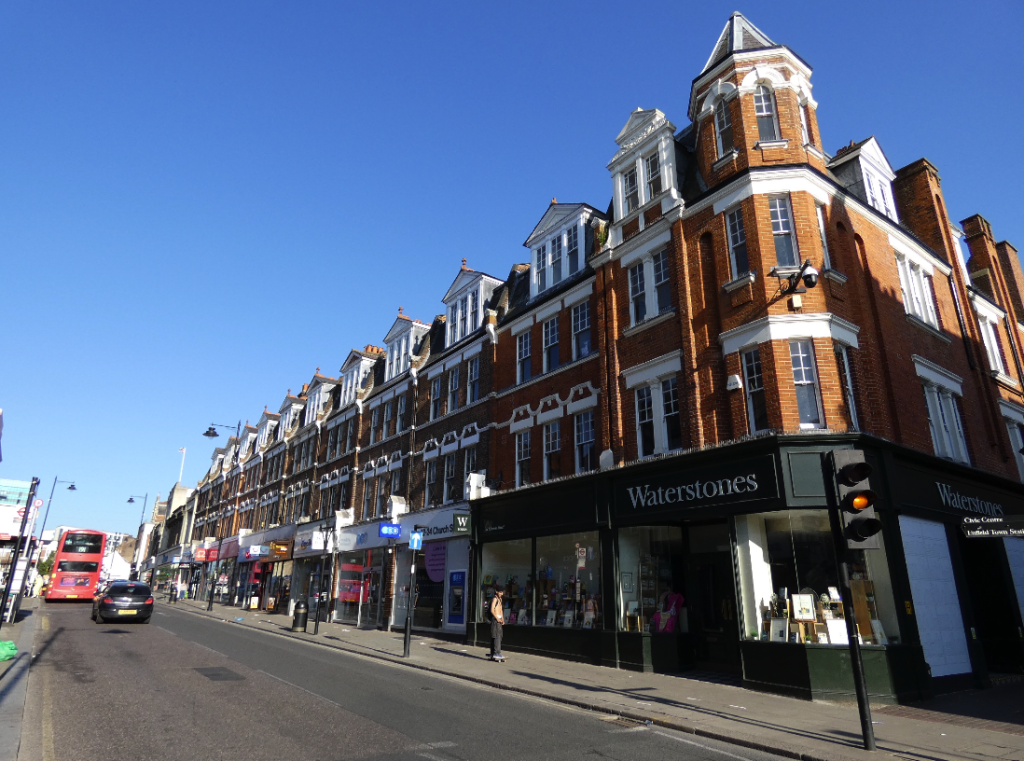
Acting for leaseholders across Enfield
We act for leaseholders across the London Borough of Enfield — Enfield Town, Bush Hill Park, Palmers Green, Winchmore Hill, Edmonton, Ponders End and Meridian Water — on lease extensions and freehold purchases.
Enfield sold a great deal of housing under Right to Buy, much of it maisonettes in blocks of four or six rather than flats in a purpose-built block. Those leases were drafted in volume and the repairing and service charge provisions in them repay careful reading.
Meridian Water is the borough’s largest regeneration scheme and creates leases of a very different kind: long terms, estate charges, management companies and a developer freeholder.
What a maisonette lease actually demises
A maisonette is not simply a flat on two floors, and the leases granted for them are frequently less careful than those granted for purpose-built blocks.
The demise is often larger and less well defined. Where a maisonette occupies the upper half of a building it may include part of the roof structure, the loft void, a share of the external walls, and sometimes a garden or a section of the front path. Where it occupies the lower half it may include the foundations. What is included determines who repairs it, and the answer is frequently unclear from the wording.
The repairing obligations often do not add up. Add together what each leaseholder must repair and what the landlord must repair. In a well-drafted lease the two account for the whole building. In a great many Right to Buy leases they do not, and the gap is usually something structural that nobody thinks about until it fails.
A lease extension is the moment to look at this. The new lease must be on the same terms as the old one save as the Act permits — which includes a modification to remedy a genuine defect. That is a narrow power and it is not a general licence to rewrite, but where a lease is properly defective it is worth raising rather than reproducing the defect for another ninety years.
The part the valuer does not do
A lease extension has two halves. One is the premium — a valuation exercise, and the reason to instruct a specialist surveyor. The other is the document you are handed at the end, and it is where a leaseholder is most exposed and least likely to be looking.
On a statutory claim under the 1993 Act the new lease must be granted on the same terms as the existing lease, save for the additional 90 years, the peppercorn rent, and a narrow set of modifications the Act permits — broadly to reflect changes to the property since the original grant, to deal with an interest the landlord no longer holds, or to remedy a genuine defect.
That is a protection, and it is only worth what the solicitor reading the draft makes of it. Landlords’ solicitors will frequently send a draft that is not a copy of your lease at all, and unless somebody compares the two line by line, the changes complete with the extension and bind you for the next century and a half. We check the draft against your existing lease clause by clause, and we resist anything the legislation does not permit.
What we look for in a landlord’s draft
Changes that alter what you pay. Service charge apportionment quietly replaced with “a fair proportion as determined by the landlord”. Widened recovery provisions for management costs, professional fees and reserve funds. New administration charges. Insurance commission made recoverable. Repairing obligations shifted from landlord to leaseholder.
Changes that alter what you may do. A qualified alterations covenant turned absolute, removing the statutory protection that consent may not be unreasonably withheld. New restrictions on subletting or short-term letting. Rights newly reserved to the landlord to build on the roof or run services through your flat. Wider forfeiture provisions, or indemnity covenants the original lease never contained.
None of this is hypothetical, and very little of it is announced. It arrives as a clean engrossment described as being “in the same form as the existing lease”, and it is found only by comparison. Some modifications are legitimate — our job is to distinguish those from the ones that simply improve the landlord’s position, and to say so in writing before anything is agreed.
Landlords and housing associations in Enfield
The London Borough of Enfield is freeholder of a very substantial Right to Buy stock, particularly across Edmonton, Ponders End and the eastern half of the borough.
Housing associations operating here include Clarion Housing Group, Newlon Housing Trust, Metropolitan Thames Valley and L&Q.
Small private freeholders hold much of the Winchmore Hill and Palmers Green conversion stock, while developer management companies run the estate arrangements at Meridian Water.
Areas we cover
Who does what
The valuation
The premium is a question of valuation evidence rather than legal argument, and it needs a surveyor who acts on enfranchisement claims regularly. A specialist valuer appraises the flat, advises on the figure to propose and the range within which to settle, negotiates with the landlord’s surveyor and gives expert evidence at the Tribunal if it comes to that. We work closely with Blakes Chartered Surveyors, and you are free to instruct any valuer you wish.
The legal work
Establishing entitlement, identifying every landlord who must be served, drafting and serving a notice that will withstand scrutiny, running the statutory timetable — and negotiating the terms of the new lease itself. The two roles are not sequential: the figure in your section 42 notice is a joint decision, which is why we involve a valuer from the first conversation rather than after the notice has been drafted.
Or have both handled together
Packaged fixed fees combining the legal work, the valuation and the negotiation are available through extension.lease, run jointly by Arcadia Law and Blakes Chartered Surveyors — often the simplest and most cost-effective route for a single flat.
Estimate your premium
Our lease extension calculator gives an indicative premium range from three figures: the unexpired term, the ground rent payable and the value of your flat. It is a starting point for a conversation rather than a valuation, but it will tell you the order of magnitude before you commit to anything.
If your flat has fewer than 90 years remaining, or a ground rent that rises at intervals of less than twenty years, it is worth running the numbers now rather than at the point you decide to sell.
Fees
Fixed fees wherever possible, agreed before we start. The figures below are starting points for straightforward matters; we will give you a tailored quote once we have seen the lease.
Group and block discounts are available where several leaseholders in the same building instruct together, priced as one exercise rather than a claim per flat. Freehold purchases are priced per participating flat from £1,250 + VAT. On a statutory claim you are also responsible for the landlord’s reasonable legal and valuation costs, which can be challenged — the costs of the negotiation itself and of any Tribunal proceedings are not recoverable from you.
Our other work for Enfield clients
Lease extensions and freehold purchases are the bulk of what we do, but not all of it. Residential conveyancing — sale and purchase of houses and flats, freehold and leasehold — sits naturally alongside a lease extension where a sale is in prospect. Landlords and management companies — service charges, section 20 consultation, arrears, consents, company filings and the transactional work every sale generates. And the documents: deeds of variation, licences to alter, lease and title reviews, and independent legal advice for guarantors and directors.
Why instruct Arcadia Law
We read the lease you are being given, not just the one you have — every draft is compared clause by clause against the existing lease, and anything the legislation does not permit is resisted. Specialists, not generalists, and members of the Association of Leasehold Enfranchisement Practitioners. We act across all thirty-two London boroughs and know how the local authority legal departments and the larger investor freeholders operate. We act for landlords as well as leaseholders, which is why we know where a landlord’s position will and will not hold — conflicts are checked before we take instructions. Tribunal and court where it is warranted, weighed against the costs, the risk and the time, which for many claims points the other way.
Common questions
Can I extend the lease on an ex-council maisonette in Edmonton?
Yes. A maisonette held on a long lease qualifies exactly as a flat does, and a local authority freeholder is subject to the same statutory framework as any other landlord.
Enfield Council is my freeholder — how does that change the process?
It does not change your entitlement. Local authorities work to settled procedures and standard forms of new lease, which usually makes the timetable predictable. What it does mean is that the draft new lease should be checked rather than accepted as issued.
What exactly does my maisonette lease include?
It depends on the wording, and in maisonette leases that is often less clear than it should be. Roof structure, loft void, external walls, foundations, a garden or path — all of them may or may not be included, and the answer determines who repairs them.
Nobody is obliged to repair part of our building — can that be corrected?
Possibly. Where a lease makes no satisfactory provision for repair, the Tribunal has power to vary it under section 35 of the Landlord and Tenant Act 1987. A lease extension is also a sensible moment to raise a genuine defect, though the power to modify on an extension is narrow.
Tell us about your Enfield flat
The address, the unexpired term and the ground rent if you know them, and who your freeholder is. If you have received an offer from your landlord, send that too. We will tell you where you stand, what a claim is likely to cost, whether the statutory or voluntary route suits you better — and, if an offer has been made, what is actually in it. The first conversation is at no cost.