
A Pre-Purchase Lease Review, and the Clauses Worth Fixing Afterwards
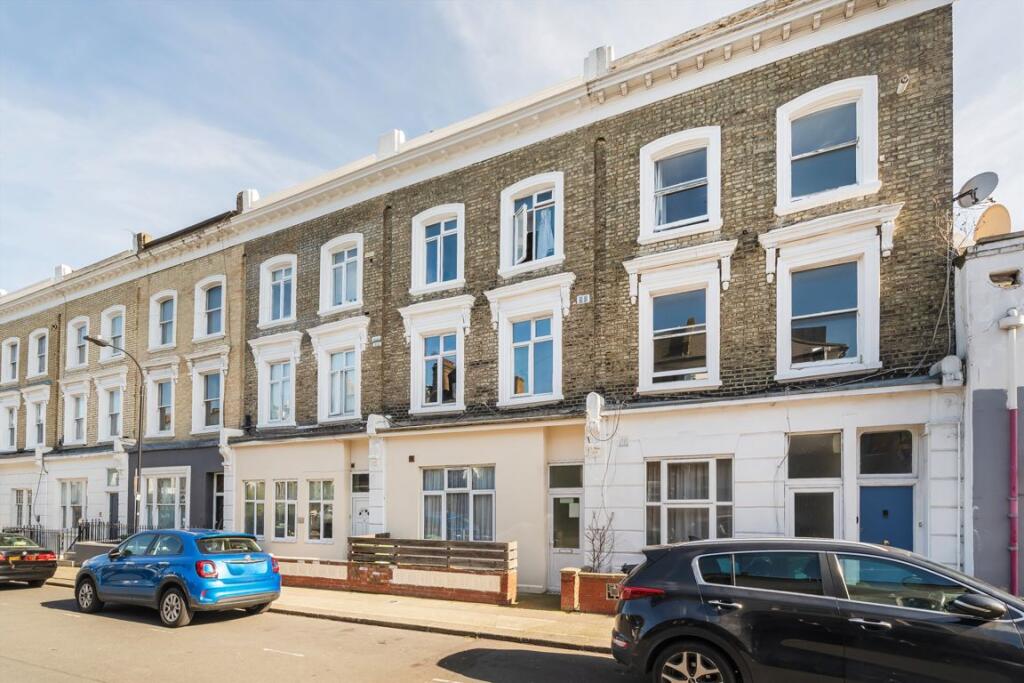
Adelaide Grove, Shepherd’s Bush W12. A returning client wanted to know exactly who repaired what before committing — and what could be improved once they owned it.
At a glance
- Service
- Bespoke pre-purchase lease review, followed by post-completion remedial work
- Location
- Adelaide Grove, Shepherd’s Bush, London Borough of Hammersmith and Fulham, W12
- Property
- Flat in a period conversion
- Client
- A returning client, who wanted thorough and specialist advice on the repair and maintenance obligations and suggestions for rectifying undesirable clauses. Their previous solicitor had been unfamiliar with the process and the practical solutions
- Outcome
- The purchase proceeded, and we were instructed to resolve the problem clauses after completion
Who repairs what
It is the question leaseholders ask most and get answered least clearly, and in a converted house it is rarely obvious.
A lease has to allocate every part of the building to somebody. The structure, the roof, the foundations, the external walls, the windows, the common parts, the drains, the boundary walls and fences. Each one is either the landlord’s responsibility, recoverable through the service charge, or the leaseholder’s own.
Where the drafting is good, that allocation is complete and unambiguous. Where it is not — and in conversions it frequently is not — there are parts nobody is obliged to repair, parts allocated twice, and definitions that do not match how the building is actually divided.
The consequences only appear when something needs doing. A roof that is nobody’s responsibility does not get repaired, and there is no mechanism to make anyone do it.
Our client wanted that mapped before committing, rather than discovering it during the first significant piece of expenditure.
The practical point. A standard conveyancing report tells you what the lease says. A review tells you what it means for this building, and where the gaps are.
Why the previous solicitor could not help
The client came to us because their previous solicitor was unfamiliar with the process and with the practical solutions available. That is worth saying plainly rather than diplomatically, because it describes a real gap in the market.
Conveyancing is a volume business. A solicitor doing thirty completions a month reads a lease against a checklist and reports on it. That is not negligence — it is the service being paid for, and for most transactions it is enough.
What it does not produce is an answer to "this clause is unsatisfactory, what can be done about it?" That question requires someone who deals with variations, rectification and landlord negotiation as their ordinary work and knows which problems are fixable, which are worth fixing, and what each route costs.
Our lease and title review work is carried out by senior solicitors for exactly that reason.
Buy, then fix
The review did not stop the purchase, and it was not intended to. The client proceeded with the facts in front of them, and then instructed us to deal with the problem clauses after completion.
That sequencing is often the right one. A seller with a buyer in hand has little incentive to negotiate a variation with their landlord, and insisting on it before exchange can lose the property. Once you own the flat, you are the leaseholder and you can approach the landlord in your own right, at your own pace, without a chain waiting.
What matters is deciding deliberately. A defect identified before exchange and left unaddressed becomes a defect you sell with; a defect identified and planned for is a piece of work with a known cost and a sensible timetable.
Reviews of this kind are usually charged on a fixed fee, or hourly from £500 plus VAT depending on complexity.
When this applies to you
Before you commit to a leasehold flat
If you are buying in a converted house, ask three questions. Does the lease allocate every part of the building to somebody? Do the service charge percentages across the block total 100%? And are the rights of access you will need actually granted, rather than merely assumed?
Those three account for most of the defects we are asked to fix, and all three are cheaper to identify before you own the flat than after.
Common questions
Is a lease review not the same as conveyancing?
No. Conveyancing reports on what the lease says. A review analyses what it means for that building, identifies defects and sets out what can be done about them — which route, at what cost, and whether it is worth doing.
Who is responsible for repairing the roof?
Whoever the lease says. In a purpose-built block it is usually the landlord, recovered through the service charge. In converted houses the drafting is often incomplete, and there are buildings where no one is obliged to repair the roof at all.
Should I fix a defective clause before or after buying?
Usually after. A seller has little incentive to negotiate a variation while a buyer is waiting, and insisting can cost you the property. Once you own the flat you can approach the landlord in your own right without a chain behind you.
What does a review cost?
Usually a fixed fee for the review and advice note, or hourly from £500 plus VAT depending on complexity and the likely time involved. The work is carried out by senior solicitors.
Client names are not used in our case studies. Properties are identified by road, block and postcode only. Every matter turns on its own facts, and outcomes described here are not a prediction of what will happen in yours.