
Retained Legal Advisers to a Grade II Listed Richmond Hill Landmark
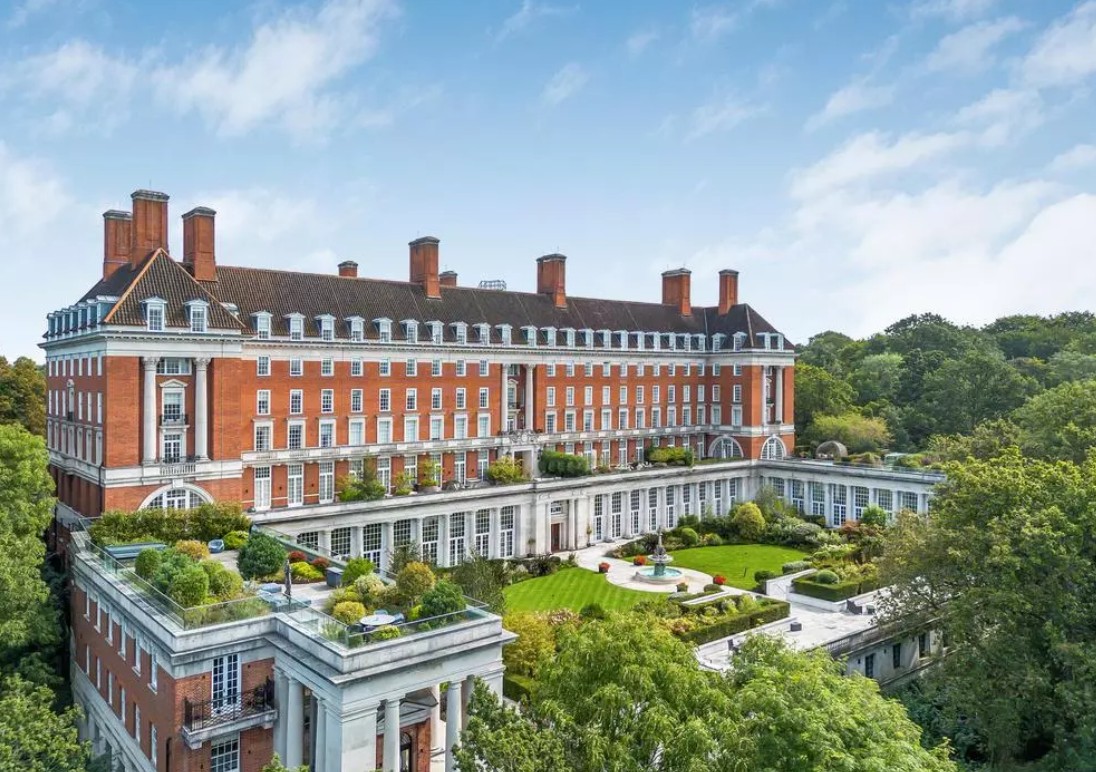
The Star & Garter, Richmond Hill TW10. Eighty-six apartments in a building constructed for injured servicemen in 1924, now owned and run by the people who live in it — and retaining us for three years.
At a glance
- Service
- Retained legal advice to a resident management and freehold company
- Location
- Richmond Hill, London Borough of Richmond upon Thames, TW10
- Property
- Grade II listed landmark conversion, 86 apartments
- Client
- The resident management company, which now also holds the freehold
- Retained since
- Three years
- Work
- Licences to alter, deeds of covenant, licences to assign, notices and title restrictions — the continuous legal work of running a listed building that changes hands flat by flat
A building with a history
There has been something notable on this spot since 1738, when an inn was opened on land leased from the Earl of Dysart. It grew into the Star and Garter Hotel, one of the great Victorian riverside destinations, rebuilt and enlarged repeatedly until fire took most of the original buildings by the 1880s.
The building standing there now was constructed between 1921 and 1924 to a design by Sir Edwin Cooper, working from a plan drawn by Sir Giles Gilbert Scott in 1915. It was built as a home and hospital for 180 seriously injured servicemen returning from the First World War — red brick with stone dressings on a steel frame, laid out on a figure-of-eight plan across a steeply sloping site, four storeys to the front and six to the rear. It was listed Grade II in 1990.
The charity that ran it announced in 2011 that the building could no longer meet modern care standards, and in 2013 it was sold to a developer, which restored and converted it into apartments. It looks out over the view from Richmond Hill that Turner painted and that is protected by its own Act of Parliament — one of very few views in England with that status.
It is, by any measure, a landmark. It is also a block of flats, and blocks of flats generate legal work.
What a listed landmark asks of its lawyers
In an ordinary block, a leaseholder who wants to alter their flat needs the landlord’s consent under the lease. In a Grade II listed building they need considerably more than that, and the two things are frequently confused.
Consent under the lease and listed building consent are separate requirements from separate sources, granted on different criteria, and having one does not give you the other. A leaseholder can hold a licence to alter and still be committing a criminal offence by carrying out unauthorised works to a listed building.
Part of the value of advising a building like this is knowing where those two regimes meet, and making sure a licence is not granted on terms that permit something the leaseholder cannot lawfully do.
The practical point. A licence to alter is not planning permission and it is not listed building consent. In a listed building all three have to line up, and it is the landlord’s job to make sure the consent it grants does not invite a breach.
A client that changed shape
We were instructed by the resident management company. Since then the residents have acquired the freehold, and the company holds that too — though not every leaseholder participated in the purchase, so the building contains both members of the freehold company and leaseholders who are not.
That is a common position and it carries a governance point worth stating plainly. The company now wears two hats. As management company it owes obligations to every leaseholder in the building, participants and non-participants alike. As freeholder it is the landlord of all of them, including its own members. Decisions have to be taken with both roles in mind, and directors who lose sight of the distinction can find themselves acting perfectly reasonably as shareholders and improperly as landlords.
Advising through that transition — and reminding the board where the line falls when a decision touches it — is a large part of what a retained relationship is actually for.
The year in the life of a building
Most of what a building like this needs is not dramatic. Flats change hands, and each sale brings a licence to assign, a deed of covenant binding the incoming leaseholder to the terms, a notice of transfer and charge, and compliance with the restriction on the title. Leaseholders want to alter their flats, and each request has to be assessed against the lease, the listed status and the interests of the neighbours. Notices are served and received. Questions arrive on Friday afternoons.
None of it is remarkable individually. All of it sits on the critical path of somebody’s sale, somebody’s building works or somebody’s mortgage offer, and a delay of three weeks in issuing a deed of covenant can collapse a chain of five.
Why a retained relationship works
Nothing starts from scratch
The argument for retaining a firm rather than instructing one matter by matter is simple, and it is not about fees.
The leases at this building have been read. The title has been examined. The restriction is understood, the covenants are familiar, and the way the freehold company relates to its non-participating leaseholders has already been thought about. When a question arrives, the answer does not begin with two hours of reading in.
For a board of directors who are residents rather than property professionals — and who did not particularly expect to find themselves running a company — that continuity is the difference between a query answered in an afternoon and a file reconstructed from scratch every time.
Common questions
Does our resident management company need its own solicitor if we already have a managing agent?
Managing agents run a building day to day; they do not give legal advice and their professional indemnity cover does not extend to it. Consents, covenants, title restrictions and statutory claims are legal work, and the company remains liable for getting them right. In practice the agent and the solicitor work alongside each other.
What is the difference between a resident management company and a resident freehold company?
A management company is responsible for the services and upkeep under the terms of the leases; it does not own the building. A freehold company owns it. One company can be both, as here, but the roles carry different duties and it matters that directors know which one they are exercising.
Do we need a licence to alter as well as listed building consent?
Yes, where the building is listed and the lease requires consent. They are separate requirements. Listed building consent comes from the local planning authority; the licence to alter comes from the landlord. Works carried out with one and not the other leave the leaseholder exposed.
What does it cost to retain a firm rather than instruct matter by matter?
We quote on application for landlord and management company work, because the volume varies enormously between buildings. The saving is rarely in the hourly rate; it is in not paying somebody to read your leases again every time a question comes up.
Speak to us
Running a building, and wondering who to ask?
Whether you are a resident freehold company, a management company or a managing agent, the first conversation costs nothing and usually establishes fairly quickly whether you need a solicitor on hand or only occasionally.
Client names are not used in our case studies. Properties are identified by road, block and postcode only. Every matter turns on its own facts, and outcomes described here are not a prediction of what will happen in yours.