
A Mortgagee Protection Clause Added in Two Weeks to Save a Sale
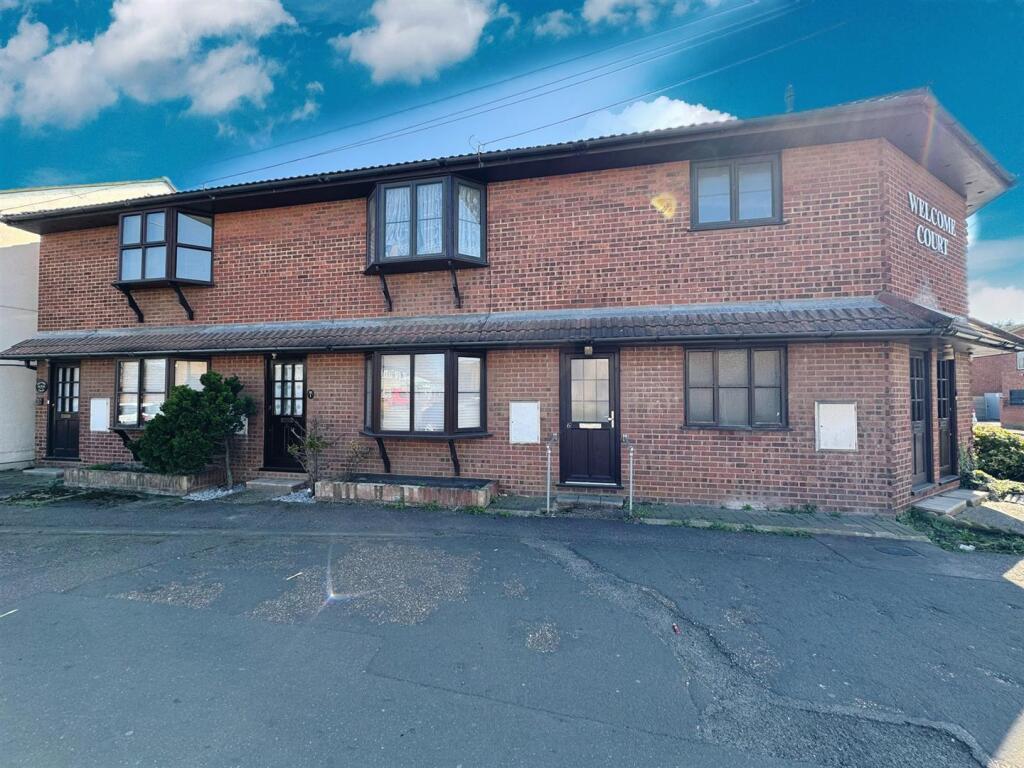
A 1960s purpose-built block in Stanford le Hope, Essex. The buyer’s lender would not advance on the lease as drafted — and only the landlord could fix it.
At a glance
- Service
- Deed of variation, acting for the landlord
- Location
- Stanford le Hope, Thurrock, Essex
- Property
- 1960s purpose-built block
- Problem
- A prospective lender required a mortgagee protection clause before it would advance on a flat in the block
- Outcome
- The lease was varied to include the clause, completed within two weeks of instruction. A modest premium was charged to the leaseholder, who also agreed to cover the legal costs
What a mortgagee protection clause does
A lender taking security over a flat is lending against a lease. If that lease can be forfeited, the security can disappear with it — and the lender may find itself with nothing, through no act of its own, because a leaseholder fell behind with a service charge or breached a covenant.
A mortgagee protection clause addresses this. In broad terms it obliges the landlord to notify the lender before taking steps to forfeit, and gives the lender the opportunity to remedy the breach — to pay the arrears, or put right whatever is wrong — rather than losing its security.
Leases drafted before such provisions became standard frequently do not contain one. In a 1960s block that is entirely unsurprising, and for decades it causes nobody any difficulty. It becomes a problem the moment a lender’s solicitor reads the lease against a modern lending checklist and declines to proceed.
Only the landlord can solve it
This is the awkward feature of a lender-driven variation. The person with the problem is the leaseholder, whose sale has stopped. The person who can fix it is the landlord, who is not party to the sale, gains nothing directly from it, and is under no obligation to help.
Plenty of landlords in that position simply do not engage, or engage slowly, which amounts to the same thing when a buyer is waiting.
Our client took a different view, and it was the commercially sensible one. A block of mortgageable leases is worth more to a freeholder than a block of unmortgageable ones. Every flat in the building shares the same defect, so the same lender objection will recur on every future sale. Fixing it once, for one flat, establishes the precedent and the drafting for the rest.
A modest premium was charged, and the leaseholder covered the legal costs — the ordinary position where a leaseholder asks a landlord to do something for their benefit.
The practical point. If you are a freeholder asked to vary a lease so a sale can proceed, the request is usually worth accommodating. The alternative is the same conversation on every subsequent sale in the building.
Two weeks, and why speed was the whole point
The variation completed within two weeks of instruction.
On this kind of matter the drafting is not the hard part — the clause is well understood and the form is settled. What determines whether a sale survives is how quickly the landlord’s side moves, because everyone else in the chain is waiting on a document that only one party can produce.
A lender objection of this kind typically arrives late, after the buyer’s solicitor has reported and the offer has been issued. By then the parties have exchange dates in mind and a delay of a month can lose the transaction entirely.
Turning it round in a fortnight is not clever lawyering. It is treating somebody else’s deadline as real.
When this applies to you
If a lender has rejected your lease
Establish exactly what the lender requires, in writing, before approaching the landlord. A precise request is answered far faster than a general complaint that the lease is defective.
And if you are the freeholder receiving that request, remember that the defect is almost certainly in every lease in the building. Dealing with it once, properly drafted, saves repeating the exercise on every future sale.
Common questions
What is a mortgagee protection clause?
A lease provision requiring the landlord to notify a leaseholder’s lender before taking steps to forfeit, and giving the lender the chance to remedy the breach. It protects the lender’s security, which is why lenders increasingly insist on one.
My lender says my lease is unacceptable. Can it be fixed?
Usually, by a deed of variation — but only with the landlord’s agreement, since a lease cannot be varied unilaterally. Establishing precisely what the lender requires is the first step.
Can the landlord charge for agreeing?
Yes. A modest premium and the landlord’s reasonable legal costs are the ordinary position where the variation is for the leaseholder’s benefit.
How quickly can it be done?
This one completed in two weeks. The drafting is straightforward; the timescale depends almost entirely on how quickly the landlord’s side engages.
Client names are not used in our case studies. Properties are identified by road, block and postcode only. Every matter turns on its own facts, and outcomes described here are not a prediction of what will happen in yours.