
Bought at Auction From the Crown, Sold On With Planning Consent
Mount Street, Dorking RH4. An estate that had passed to the Crown with no one to inherit it, bought at auction in 22 days and sold on once redevelopment consent was secured.
At a glance
- Service
- Auction purchase and onward disposal
- Location
- Mount Street, Dorking, Mole Valley, Surrey, RH4
- Seller on purchase
- The Government Legal Department, disposing of an estate that had passed to the Crown as bona vacantia
- Acting for
- The purchaser, and later the same client as seller
- Outcome
- Purchase completed in 22 days against the 28 the contract allowed. Planning consent for redevelopment was then secured, and the property sold on with the benefit of it, conditions undischarged and disclosed as such
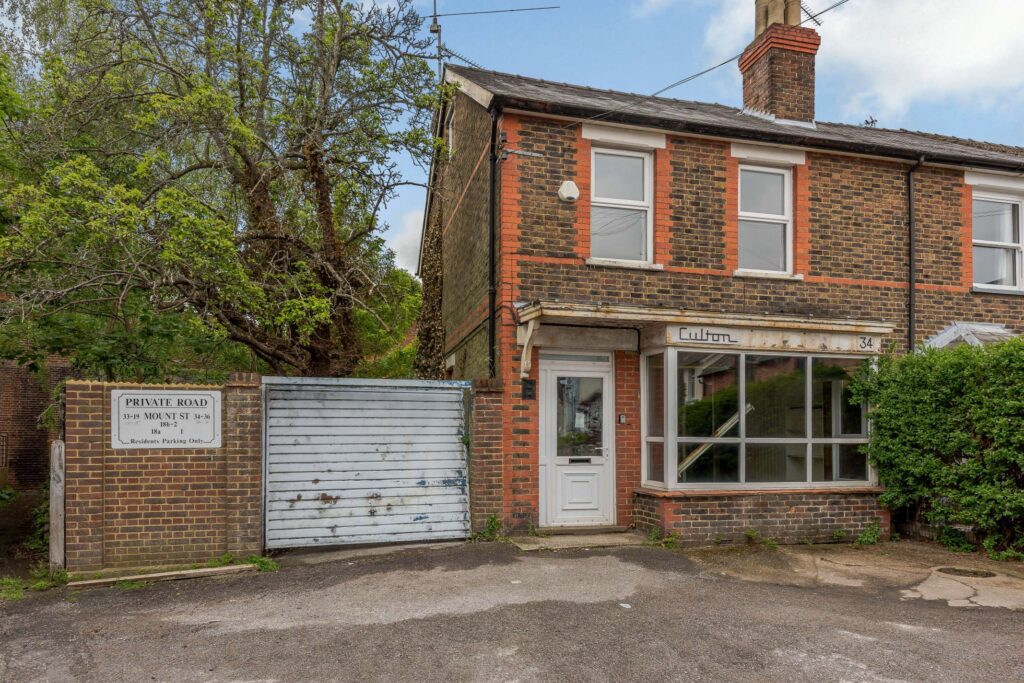
Buying from the Crown
The seller was the Government Legal Department, disposing of an estate that had passed to the Crown as bona vacantia — property left by someone who died without a will and without anyone entitled to inherit.
That is a particular kind of purchase. The Crown never occupied the property, has no knowledge of it and does not answer enquiries about it in the way an ordinary seller would. There are frequently no deeds beyond what is on the register, no information about the state of the building, and nobody to ask about boundaries, disputes, works or anything else a buyer would normally want to know. Title guarantee is limited.
None of that makes the purchase a bad idea. It makes the pre-auction review the whole of the protection, because there is nobody to fall back on afterwards.
The review that has to happen before the hammer
Auction contracts exchange when the hammer falls. There is no cooling-off, no subject to survey, and no renegotiation because something unwelcome turned up in the pack afterwards. Whatever is in that pack becomes the buyer’s problem the moment the bidding stops.
We were instructed before the auction, which is the right order and not the usual one.
For a purchase intended to be redeveloped, the review has to look past the questions that matter on an ordinary purchase. Restrictive covenants that would prevent the development. Rights of way and rights of light that constrain what can be built. Whether the title is registered, and if not, what the epitome actually proves. Whether there are third-party rights over any part of the site. A covenant that is a footnote on an owner-occupier’s purchase can be the whole value of a development site.
The contract allowed 28 days. We completed in 22.
The practical point. Send us the legal pack before you bid, not after. Beforehand the review tells you whether to buy. Afterwards it only tells you what you have bought.
What planning consent does to a title
Between purchase and sale, the client obtained consent for redevelopment. That transforms what is being sold — not physically, but legally and commercially. The asset a buyer is now acquiring is the land plus a permission, and the permission is only worth what it can be relied on to deliver.
Here the consent was granted before the property went back to market, and none of the conditions had been discharged. The buyer would take the site with the benefit of the permission and the whole of the conditions work still ahead of them, to be dealt with as part of the build out.
That is an ordinary position rather than a defect, and frequently the right one commercially — discharging conditions costs money and time that a seller who is not building out has no reason to spend. But it has to be disclosed plainly and priced honestly. A bidder who assumes the conditions are dealt with, and finds on site that pre-commencement conditions are still outstanding, has bought something materially different from what they thought.
The legal pack from the other side
Having reviewed a good many auction packs on behalf of buyers — including this property’s own, on the way in — preparing one is a different discipline with the same knowledge behind it.
The object is to disclose properly, because the seller carries the consequences of what is not disclosed, while presenting the title and the consent in a form that gives a bidder confidence rather than questions. We prepared the pack and the contract, dealing with the consent and its outstanding conditions in terms a buyer’s solicitor could report on quickly.
A pack that raises three obvious queries suppresses bidding, because those queries cannot be answered before the hammer falls. Setting it out clearly protects the seller at least as much as the buyer: what has been properly disclosed cannot afterwards be complained of.
When this applies to you
Buying to add value and sell on
It is a well-established strategy and a legally exposed one, because both ends run on somebody else’s timetable. Having the same firm on both transactions means the title questions raised at purchase are already answered at sale, and the pack is prepared by someone who knows what a buyer’s solicitor will look for, having been that solicitor.
Common questions
Do I need a solicitor before bidding at auction?
Yes. Exchange happens on the fall of the hammer, so the legal pack has to be reviewed before you bid. There is no opportunity to withdraw or renegotiate afterwards, and the deposit is at risk if you cannot complete.
What is bona vacantia, and what changes when the Crown is the seller?
It is property that has passed to the Crown because someone died without a will and without anyone entitled to inherit. The Crown has no knowledge of the property, does not answer the usual enquiries, and offers limited title guarantee — so the pre-auction review carries far more weight than it would on an ordinary purchase.
Can I sell a property with planning permission before implementing it?
Yes. Planning permission runs with the land, and selling with the benefit of an unimplemented consent is common. What matters is disclosure: the buyer needs to know the consent is implementable and exactly which conditions remain outstanding. At Mount Street none had been discharged, and the pack said so.
Can you complete faster than the auction contract requires?
Often, particularly where funding is in place. Here the contract allowed 28 days and we completed in 22. It depends on the searches, the seller’s solicitors, and starting work on the day of instruction.
Client names are not used in our case studies. Properties are identified by road, block and postcode only. Every matter turns on its own facts, and outcomes described here are not a prediction of what will happen in yours.