
A Lease With No Right of Access to the Front Door
Burlington Road, New Malden KT3. Two flats, two leases, and neither of them granting the leaseholders the right to walk up their own front path. Corrected by agreement, without the Tribunal.
At a glance
- Service
- Rectification of defective leases
- Location
- Burlington Road, New Malden, Royal Borough of Kingston upon Thames, KT3
- Property
- Two-flat conversion, ground and first floor
- Defects
- No rights of access granted over the front paths, and repair and maintenance obligations that conflicted between the two leases
- Outcome
- Both leases rectified by deed. We drafted, the landlord’s solicitors reviewed, and the parties agreed — no application to the First-tier Tribunal was necessary
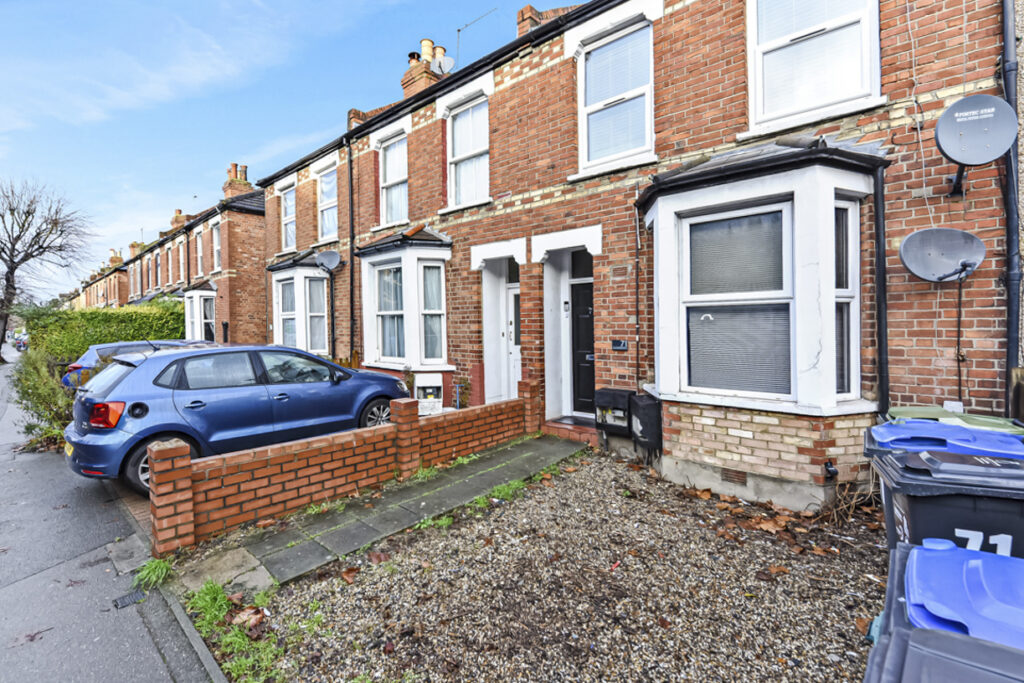
The first defect: no way to the front door
A converted house in New Malden, two flats, two leases. Read separately they each looked unremarkable. Read together against the building they described, they did not work.
Neither lease granted the leaseholders any right of access over the front paths.
Stated plainly it sounds impossible, and it is more common than anyone would guess. The draftsman knew perfectly well that the residents would walk up the path to their own front doors. What he did not do was grant them the right to. In a lease, an obvious practical fact that nobody has expressed as a right is not a right.
For as long as everyone gets on, nothing happens. It surfaces when something changes — a sale, a dispute, a new owner who reads the lease and asks the question. A buyer’s solicitor who spots it will raise it, a lender may decline to proceed, and by then it is being fixed under time pressure by parties who no longer agree about anything.
The second defect: obligations that contradicted each other
The repair and maintenance provisions in the two leases conflicted. What one lease allocated, the other allocated differently, and between the two there were things nobody was obliged to do at all.
The consequence is worse than an argument about who pays. If no one is obliged to repair something, no one can be made to. If the obligations do not align, contributions may not be recoverable and the work does not get done. In a two-flat conversion, where there is no managing agent and no reserve fund, a defect of this kind can mean a roof going unrepaired for years while both leaseholders point at each other with their leases in hand.
The practical point. In a two-flat conversion the two leases have to be read against each other, not just individually. Most defects only appear in the gap between them.
What we did, and why agreement beat the Tribunal
We drafted deeds rectifying both leases — granting the access rights that should have been granted at the outset, and aligning the repair and maintenance obligations so that every part of the building is somebody’s responsibility and the contributions match.
The drafts were prepared for the landlord’s solicitors to review. That order matters. A deed presented as a finished proposal, drafted by the party who has actually analysed the problem, is far more likely to be agreed than an invitation to the other side to work out what should be done.
There is a statutory route for varying defective leases where the parties will not agree, and it runs to the First-tier Tribunal. It is a real and useful power. It is also slower, more expensive and less certain than drafting something everybody can accept. Where the landlord will engage — and most will, since a block of defective leases is worth less to a freeholder than a block of sound ones — agreement is faster and cheaper. The Tribunal is what you turn to when that fails, not what you begin with.
Here it was not necessary. Both leases were corrected by agreement.
When this applies to you
Defects are found at the worst possible moment
Mid-sale, mid-remortgage, or mid-dispute. The defects themselves are usually decades old and entirely fixable.
If you own a flat in a converted house, it is worth having the lease read before you need to. Access rights, repair obligations and service charge apportionments that do not total 100 per cent are the three that recur, and all three are far cheaper to correct when nobody is under pressure.
Common questions
What if my lease does not give me a right of access to my own front door?
It is a defect and it needs correcting by deed. It rarely causes practical difficulty day to day, but it will be raised on a sale and it can affect a lender’s willingness to proceed, so it is better addressed in advance than under pressure.
Do all the leases in a building have to be varied together?
Where the defect concerns how obligations are shared between flats, yes — varying one lease and not the other simply creates a different mismatch. Here both leases were rectified so that the two align.
Do we have to go to the Tribunal to correct a defective lease?
Not if the parties agree. There is a statutory route to the First-tier Tribunal for cases where they do not, but a deed agreed between landlord and leaseholders is quicker and cheaper, and most landlords will engage because sound leases are worth more than defective ones.
Who pays for the work?
Usually the party who needs the variation, and often the landlord’s reasonable costs as well. Where the whole building benefits, as here, the cost is sometimes shared. It is worth agreeing that before the drafting starts.
Speak to us
Something wrong with your lease?
Send us the lease. We will tell you whether it is a defect worth correcting, and whether it can be done by agreement.
Client names are not used in our case studies. Properties are identified by road, block and postcode only. Every matter turns on its own facts, and outcomes described here are not a prediction of what will happen in yours.