A Lease Extension Against a Council — and the Unauthorised Works It Uncovered
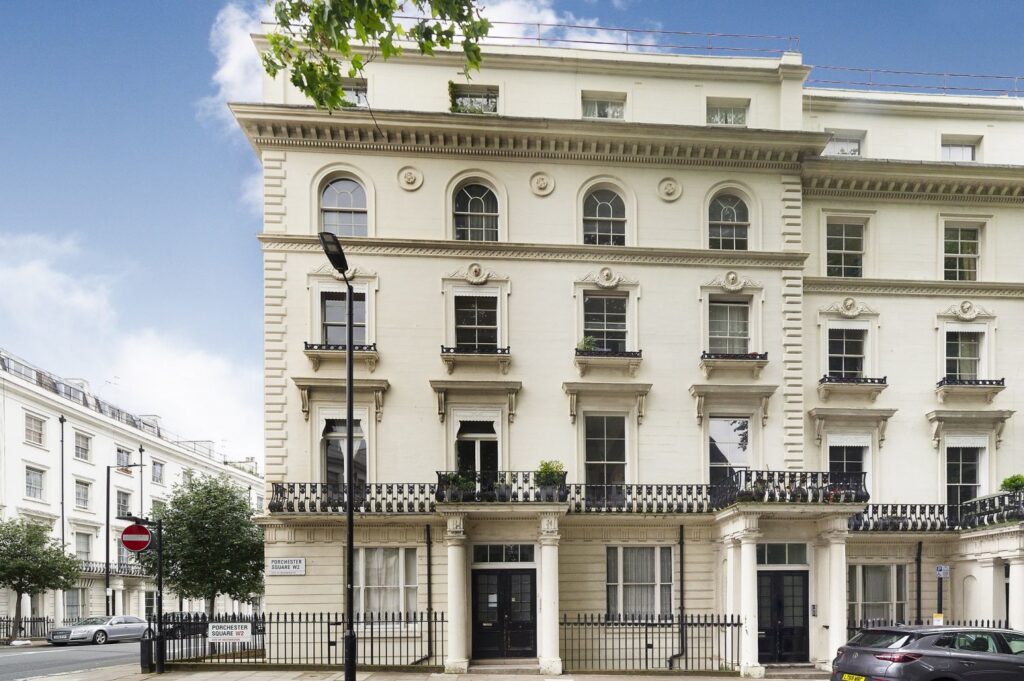
Porchester Square, Bayswater W2. Eighty-three years unexpired and a council freeholder. Then, midway through the claim, alterations came to light that nobody had ever obtained consent for.
At a glance
- Service
- Statutory lease extension, with a retrospective licence to alter
- Location
- Porchester Square, Bayswater, City of Westminster, W2
- Property
- Flat in a stucco-fronted mansion block
- Landlord
- Westminster City Council
- Unexpired term
- 83 years
- Ground rent
- £10 a year, extinguished to a peppercorn
- Valuation
- Blakes Chartered Surveyors, who also negotiated the premium
- Complication
- Unauthorised alterations surfaced during the claim. The council required a retrospective licence to alter, supported by structural calculations and confirmation of building regulations compliance, but sought no premium
- Outcome
- A new lease of 90 years on top of the existing term at nil ground rent, completed eight months from instruction, with the breach regularised and the claim not delayed

Why 83 years mattered more than the premium
Our client owned a flat in a stucco conversion on Porchester Square with 83 years left to run. That figure is the whole story of this claim.
Below 80 years unexpired, marriage value becomes payable and the premium rises sharply. Above it, it does not. The cost of waiting is not gradual: it steps up at a fixed point and there is no way back across that line. A leaseholder who serves at 83 and one who serves at 79 are in materially different financial positions, and the difference is often tens of thousands of pounds.
The ground rent was modest at £10 a year, but it was extinguished to a peppercorn as part of the new lease, which is part of what the premium buys.
The practical point. If your lease is anywhere near 80 years, the date matters more than the market. Find out your unexpired term before you do anything else.
Acting against a council freeholder
Westminster City Council was the freeholder. Local authority landlords are neither harder nor easier than private ones, but they are different, and the difference is procedural rather than legal.
They run their own internal approval timetables, their own precedent documents and their own points of contact, and a claim that ignores those conventions does not fail — it simply drifts. Weeks are lost waiting for a step that could have been anticipated. Knowing in advance how a particular authority handles a statutory claim is worth more to the client than any amount of correspondence after the fact.
Blakes Chartered Surveyors valued the flat and negotiated the premium. The claim completed eight months from instruction.
We act against every London borough council regularly, and against the major private estates and housing associations alongside them. That familiarity is why claims like this one run to time.

The works nobody had consented to
Partway through the claim, alterations came to light that had been carried out to the flat without the landlord’s consent.
This is one of the genuine traps in leasehold, and almost nobody writes about it. A lease extension claim brings the landlord’s attention to a flat in a way that nothing else does. Works that had sat unremarked for years surface — and the breach they represent can hold up the very claim that exposed it.
Our client had not carried out the works. That rarely helps: a breach of covenant passes with the lease, and the leaseholder who owns the flat when the landlord notices is the one who has to deal with it.
Regularising it without losing the claim
The council sought no premium, which was the good news. What it did require was a retrospective licence to alter supported by proper evidence: structural calculations for the works that had been carried out, and confirmation that they complied with building regulations.
We arranged and facilitated all of it alongside the lease extension, and the claim completed on schedule.
That was the object of the exercise, and it was achievable only because the problem was addressed as soon as it appeared rather than argued about. A leaseholder who disputes whether consent was ever needed, or waits to see whether the landlord presses the point, spends the time they do not have — because a statutory claim runs to deadlines that do not pause while a side issue is resolved.
The practical point. If you are contemplating a lease extension and you know works were done before your time, deal with that first. The claim is what brings it to light, and a retrospective licence obtained calmly costs far less than one obtained against a statutory clock.
When this applies to you
If your freeholder is the council
The statutory right is identical whoever owns the freehold. A council cannot refuse a qualifying claim any more than a private landlord can.
What changes is the rhythm. Expect a process rather than a negotiation, expect it to move at the authority’s pace, and get the claim served properly first time — because a defective notice against a council freeholder costs months rather than days.
Common questions
Can my council refuse to extend my lease?
No. A qualifying leaseholder has a statutory right to a new lease of 90 years on top of the existing term at a peppercorn rent, and it is exercisable against a local authority freeholder in the same way as against any other landlord.
Why is 80 years such an important number?
Below 80 years unexpired, marriage value becomes payable and the premium increases sharply. This claim was served at 83 years, which kept it out of that territory. The threshold cannot be recrossed once passed.
Does the ground rent disappear?
Yes. A statutory lease extension is granted at a peppercorn, meaning nothing is payable. Here a £10 annual rent was extinguished as part of the new lease.
How long does a claim against a council take?
This one took eight months from instruction to completion. Local authorities run their own approval timetables, so the pace is set by their internal process rather than by the negotiation.
What happens if unauthorised alterations come to light during a lease extension?
The breach has to be regularised, usually by a retrospective licence to alter. It does not automatically defeat the claim, but it can delay it, and a landlord is entitled to require evidence — structural calculations and building regulations compliance were required here. Deal with it as soon as it appears rather than arguing about it, because the statutory deadlines do not pause.
Speak to us
Find out what your extension will cost
Our calculator gives an indication in a minute. A conversation gives you the premium, the terms worth arguing for and a realistic timescale.
Client names are not used in our case studies. Properties are identified by road, block and postcode only. Every matter turns on its own facts, and outcomes described here are not a prediction of what will happen in yours.